
The very premise of this post dates me, I get it. Listeners who use Spotify and other music streaming services are awash in about as much music as they can handle at their fingertips all the time. What would it mean to be restricted to… just ten albums? Also, while the “album” isn’t completely dead, I would argue that with the advent of widely-available digital music “listening to an album” is not how most listeners, most of the time, listen to or conceptualize music.
What can I say, though? My music-listening habits were forged in the late 1980’s with the advent of CD’s. Most of my music listening still involves listening to one album from start to finish, even if I am listening to them digitally from my phone. (I only created playlists for the first time a month ago.)
I come from a time, in other words, where the question “if you were stuck on a desert island and could only take ten albums with you, what would you take?” made more sense. Realistically, we stood no better chance of being stranded on a desert island with ten albums and working stereo equipment than we did getting caught in quicksand. At least, though, the first clarifying question we would have asked would not have been, “Hey, do I get to have my phone with me?”
Anyway. In no particular order, my ten “desert-island” albums are:
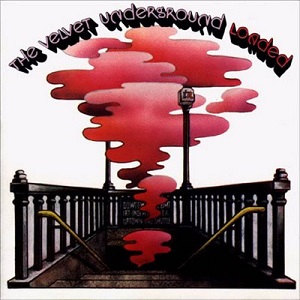
The Velvet Underground, Loaded (1970)
The last Velvet Underground studio album, and the only one without John Cale, is a lighter, poppier effort than their earlier classics. Arguably it is not their best work. Those are arguments I would be willing to entertain. And yet Loaded is my sentimental favorite, the one I return to over and over again. From the earnestness of “Sweet Jane” and “Rock and Roll” to the ridiculousness of “Lonesome Cowboy Bill” to the urban desolation of “Oh! Sweet Nuthin,” Loaded reaches me in a place that the drug-addled Nelson Algren/William Burroughs vibe of The Velvet Underground & Nico and White Light/White Heat just doesn’t. (Not that I don’t love those albums, much less William Burroughs! It’s just that I have never danced alone in my room to them, whereas—confession time—I have to Loaded.)
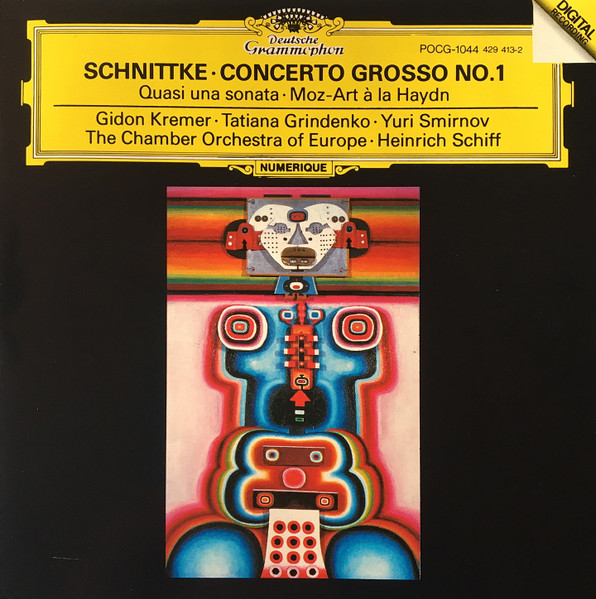
Alfred Schnittke, Concerto Grosso No. 1, Quasi una Sonata, Moz-Art à la Haydn. Gidon Kremer, Tatiana Grindenko, Yuri Smirnov, The Chamber Orchestra of Europe, Heinrich Schiff (Deutsche Grammophon, 1988)
Schnittke is the only composer I know of whose music often makes me laugh. To be clear, I am laughing with it, not at it. Schnittke is able to write music with an actual sense of humor! The music on this album is probably his most famous, and it’s Schnittke at his playful best: his “polystylism” gives him resources for packing in virtually every timbre and sonic texture imaginable. To have the audacity to write a “Concerto Grosso” in 1977, and then load it full of John Cage-esque prepared piano, tango, baroque trills and harpsichord flourishes, and much else? The result is playful, histrionic, bleak, daft, and fun in a way that so much classical music isn’t.
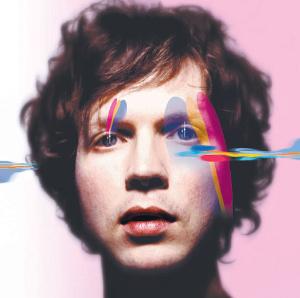
Beck, Sea Change (DGC, 2002)
Sea Change makes the list not only because it’s Beck, but because it inhabits a crucial place in the annals of break-up music. The songs reputedly date from the end of a long-term relationship, and to call the overall tone of this album bleak is an overstatement. It’s especially restrained and elegiac in light of the overall gonzo tone of the rest of Beck’s catalog. Is it Beck’s best music? Probably not. But I still come back to the overall emotional space Beck creates on Sea Change as a way of exploring my own emotions about relationships’ endings. I love Adele, but I feel like Beck captures a vulnerability here that Adele’s most famous love-gone-wrong songs don’t.

Gustav Mahler, Symphony No. 6 in A Minor, “Tragic”. Vienna Philharmonic, Pierre Boulez (Deutsche Grammophon, 1995)
Man is it hard for me to include only one Mahler recording on here! Half this list could have been Mahler. But if I have to pick one (since that is the rule I set for myself), I have to pick Boulez and the Vienna Philharmonic doing Mahler’s 6th. First off, the music itself. I am apparently one of the few Mahlerians who prefers the relative classical restraint of his middle symphonies (the 4th through the 7th) to the elephantiasis and bathos of, say, the 2nd and 3rd. Mahler reaches the pinnacle of this middle period in the 6th, a relentless, driving colossus of a symphony that well earns the apocryphal title of “Tragic.” And then there is this recording of it, which won numerous awards and accolades after its release. I have heard several recordings of the 6th by this point, but none of the others have the spaciousness and sonic edge of this one. As a friend in graduate school said, “I listen to it and ask myself: How did they do that?” The rest of Boulez’s mid-90s Mahler cycle on DG is hit or miss (one reviewer, I remember, asked rhetorically, “I wonder if Boulez actually likes this music”; ouch), but the 6th is a definite keeper.
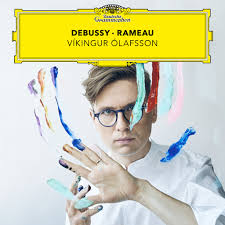
Vikingur Olafsson, Debussy-Rameau (Deutsche Grammophon, 2020)
I can’t say that I was a big fan of Debussy before hearing this album, not to mention that I had heard virtually no Jean-Philippe Rameau. Olafsson, though, fully inhabits this music, showing that these two French composers, separated by centuries, complement one another. I don’t know if it’s Olafsson’s piano performances or the recording, but this may be the most intimate-sounding piano recording I have ever heard, almost painfully so. It exposes the inner life of the music like the exposed nerve-and-blood-vessel pulp of a tooth.
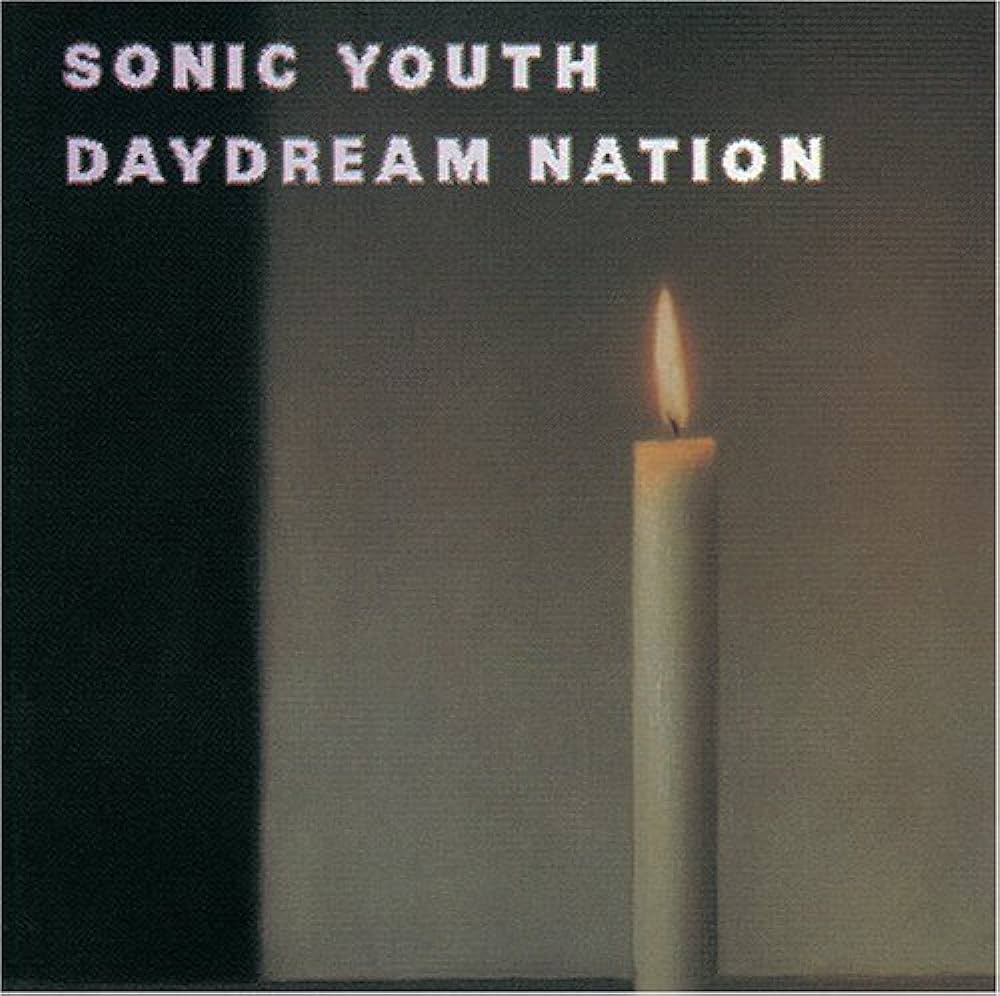
Sonic Youth, Daydream Nation (Blast First, 1988)
I bought Daydream Nation in 1989 on the strength of the song “Candle,” which was either the first or second single to be released from it. I listened to the whole CD and, with the exception of “Candle” and “Teen Age Riot,” the two big college-radio singles from it, it left me cold. I could not comprehend what so many critics loved about this album. I didn’t listen to the whole thing again until my mid-thirties, probably the same age as those critics who loved it back in ’88 and ’89, and I finally got it. The camp drama and overproduction of ‘70s rock meets alt-jazz on Daydream, and the mixture still feels fresh and vital to me. No one ever asks me to explain the United States in the 1980s, but if someone did I would tell them to listen to Daydream Nation and Guns ‘n Roses’ Appetite for Destruction. The entire corrupt undercarriage of 1980s America, its diseased subsoil, its addiction to power and to self-delusion: it’s all in there.
Edward Elgar, Cello Concerto, Sea Pictures, Jacqueline du Pré, Dame Janet Baker, London Symphony Orchestra, Sir John Barbirolli (EMI/Gramophone, 1967)
This is one of those classical albums that always makes the best-of lists, and for good reason: du Pré’s performance on this recording singlehandedly made Elgar’s Cello Concerto a household name (as it were). Only twenty years old when she recorded it, du Pré performed with such confident virtuosity that even almost sixty years and numerous recordings later, many still consider this the definitive recording of the Concerto. Of course, there is no performance without Elgar’s composition, which is probably my favorite Elgar: dramatic and complex. Dame Janet Baker’s performance of the Sea Pictures is certainly fine, but make no mistake, this is du Pré’s show.
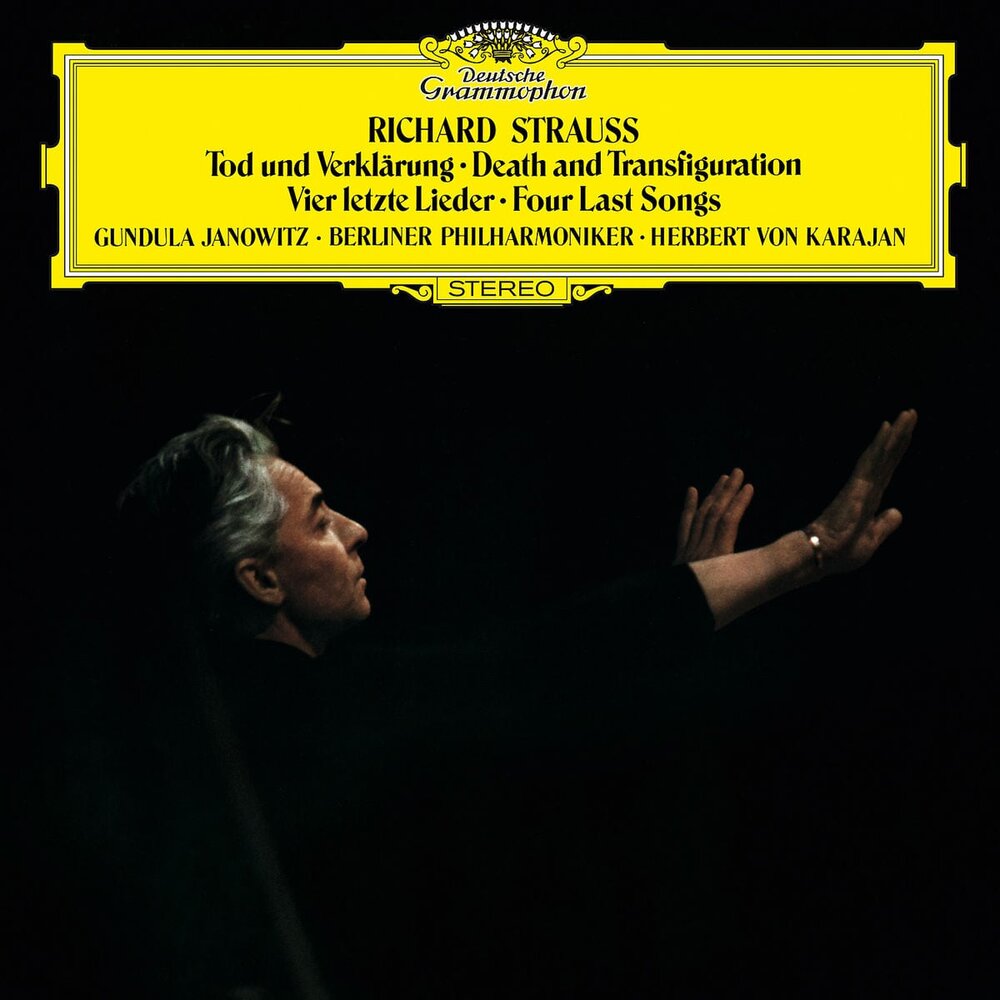
Richard Strauss, Tod und Verklarung, Metamorphosen, Four Last Songs. Gundula Janowitz, Berlin Philharmonic, Herbert von Karajan (Deutsche Grammophon, 1974)
Richard Strauss was an egotistical, Nazi-collaborating, antisemitic train wreck of a human being. This needs to be said. And yet, I can’t help but love his music. The real star of this album is Gundula Janowitz’s performance of the Four Last Songs, which will haunt me for the rest of my life. No other performance I have ever heard of the Songs comes close to Janowitz. Metamorphosen is a masterpiece of musical elegy, especially if you can forget for a moment that Strauss likely wrote it to memorialize his feelings on the Allied bombing of the Munich Opera House in 1944. (I mean, there is a lot to lament or criticize about the Allied bombing campaigns in Germany at the end of the war—hello, Dresden? Anyone read Slaughterhouse-Five?—but the fact that Strauss summoned his feelings and considerable artistic temperament to mourn a building feels emblematic of a lifetime of really skewed priorities to me.)

Keith Jarrett Trio, Still Live (ECM, 1986)
I am one of those people who isn’t much into jazz, but I know what I like. Since I bought this double album in 1987 (or was it 1988?), I have loved it. Jarrett and his trio (Jack DeJohnette on drums, Gary Peacock on bass), in a live concert in Germany in 1986, take jazz standards (“My Funny Valentine,” “The Song is You,” “Someday My Prince Will Come”), together with some original Jarrett compositions, then transmogrify them through all kinds of unexplored musical territory. The sonic texture of this recording is astounding—it was a fairly early instance of full-digital recording—and it is engineered to an energetic sheen. Still Live also gives the listener one of Jarrett’s controversial performance tendencies—his near-constant vocalization while he plays. It’s not subtle or otherworldly, like just catching Glenn Gould’s breathing on his classic recording of the Goldberg Variations. No, he grunts, howls, squeals; it’s like someone is forcibly wringing the music out of him. A lot of people find this aspect of Jarrett distracting, but I honestly don’t. I can’t imagine this live album without it—it adds to its irresistible energy. Plus, if John Cage taught us anything he taught us that the ostensibly “non-musical” aspects of musical performance, its accidents and extraneous noises, are an irreducible part of the actual music that gets made. Jarrett’s audibly squeezing the music out of himself is an example of Cage’s insight.
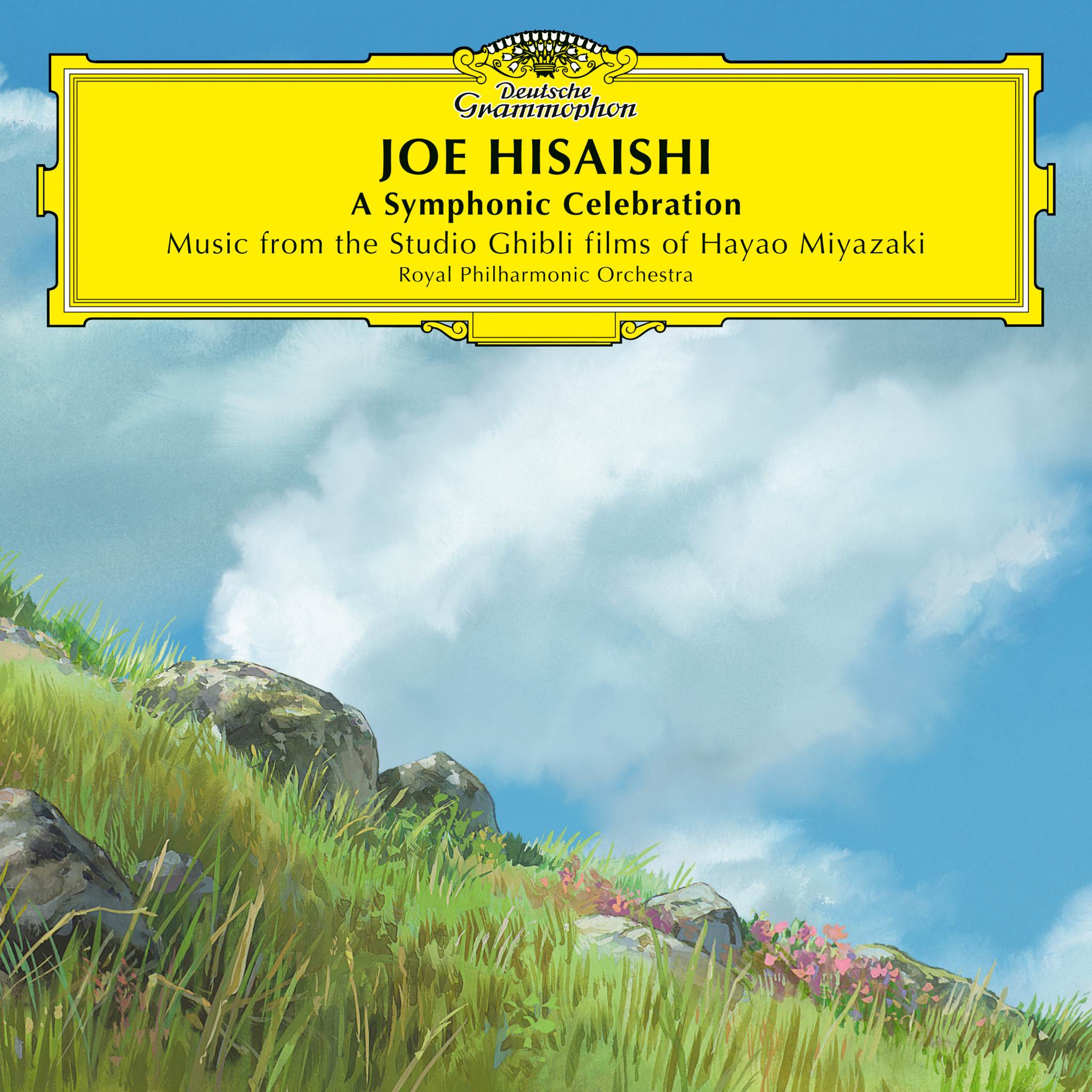
Joe Hisaishi, A Symphonic Celebration: Music from the Studio Ghibli Films of Hayao Miyazaki. Royal Philharmonic Orchestra (Deutsche Grammophon, 2023)
OK, there is a lot of sad, dark, and/or heavy music on this list, so let’s end on a (mostly) cheerful note. I love Miyazaki movies, but I have to confess that at least half of my love of them is love of Joe Hisaishi’s music. Hisaishi has been collaborating with Miyazaki on film scores since Nausicaa of the Valley of Wind (1980), and I cannot imagine the films without his music. Nothing else quite sounds like Hisaishi to me. In 2023, DG gave Hisaishi an orchestra and the opportunity to rearrange selections from over forty years of film scores, and the results are fantastic. On my imaginary desert island, there is a lot of Hisaishi music missing from this album that I would miss, but this would give me the essentials.
A Concluding Word
I hope it’s clear by now that this exercise isn’t the same as “pick the ten best albums ever recorded.” Not really, anyway. I hope it comes through that I think these ten albums are pretty great, and I would love it if you listened to them because of what I say about them, but that’s not the same as an attempted critical judgment of absolute quality (whatever that is). Rather, it’s another way of answering the question “What albums do I, Brian Cubbage, like the most? Which ones have stayed with me over the course of constant listening and re-listening? Which ones best express what my emotional life is like?” The answer to those questions is a mixture of critical judgment, the limitations engendered of when and where I was born, and the sheer happenstance of when I heard (or really understood) a particular album for the first time.
Many people have a tendency to overidentify with the music they like. There is a truth, though, in this tendency: music can serve as a social handle that we hope others can grab in the right way. Music expresses the texture of one’s emotional life in ways that little else can. Maurice Merleau-Ponty belittled music by saying it was too on the other side of the world to disclose to us the world and perception, which was of course his real cherished interest; it refers to little else but itself.[1] I’m not sure Merleau-Ponty’s take is entirely right. It overlooks the capacity music has to connect us with the inner lives of other people, which is a pretty tremendous achievement if you ask me.
This list, then, is offered in the spirit of anyone who is curious what it is like to be inside my head, what handle you might hold onto to grasp the weirdo who writes all the other stuff posted here.
[1] Perhaps this oversimplifies what Merleau-Ponty says about music a little bit. In a radio lecture from 1948, he accords to music the privilege of disclosing, as Proust said, the world of the musician, and beyond that the “great world of possible music, the region of Debussy, the kingdom of Bach.” But music does little more than that for Merleau-Ponty.
 Thought Required; Pants Optional.
Leave a comment