Author: bcubbage

  • Writing Under the Gun

    In keeping with my earlier theme, I’ve just found out about, like, the most incredible thing I ever heard of: National Novel Writing Month (NaNoWriMo). The idea is that you sign up and make a public commitment to write an entire draft of a novel in the month of November.

    I’m totally gonna do this.

    I haven’t thought of a premise yet I want to use for this project. I have a couple of ideas I’ve been booting around for a while, one of them for a very, very long time, but neither one feels right for this kind of endurance trial.

    Do you have a premise you think would suit my literary sensibilities? If so, let me know. I’m up for just about anything besides Nicholas Sparks weepies. Be warned, though, that I don’t work on commission.

  • My Little Friend

    I have a little friend.

    At least, he was my friend.

    I call him my inner critic.

    My inner critic thinks he has my best interests at heart. He is terrified of the embarrassment of being wrong or saying something out of turn. He is painfully sensitive to what other people might think. He is terrified of awkward personal disclosures.

    My inner critic is the reason I don’t blog much. I write a lot of things I never post because my inner critic reads them and says “This isn’t good enough. No one wants to read this. And if someone did, it would bring us shame.”

    This is what my little friend says.

    I have grown weary of my little friend.

    My little friend is a presumptuous ass.

    How on Earth does my little friend know what everyone else might find interesting or worthwhile, anyway?

    So, from this day forward I resolve to blog more. My little friend will still be telling me not to do it, but I am learning that it’s the things about which he squawks loudest that I need to post.

    So expect to hear more from me soon.

  • My Bucket List

    1. Learn Attic Greek.
    2. Write a novel, preferably one that hasn’t already been written.
    3. Travel the Continent; learn what the heart is and what it feels.
    4. Learn to play the harpsichord.
    5. Give each and every one of you a great big hug and ask you to borrow $5.
    6. Finish bucket list.

  • Desperately Seeking…

    Now that I’m single, it’s time for me to put myself out there the way God intended: the personal ad. So, here it is:

    FIRE SALE! SWM, 37, divorced, seeks F, 35-45ish, for fun and possible soulmatery. Must be able to keep up with a bewildering and largely pointless pastiche of literary, intellectual, and cultural references I can’t seem to turn off. Ability to smile indulgently at fumbling attempts to “keep it together” and occasional breathtaking lapses of self-awareness a plus. Must feel superior to football fans. And would it kill you to tell me every once in a while that I look nice? Really, now. No Juggalos please. Smokers or carnivores acceptable; smokivores OK but had better be really damned good-looking. Ready to settle? Send your picture and a writing sample to “Manager’s Special,” Box 563.

  • Nature, Chance, and Fate


    Today I have heavy topics on my mind: nature, chance, and fate. I have talked myself into a tentative thesis: Eventually, every person who lives long enough has to contend in one way or another with these three. The critical edge of this thesis is that most human social institutions, especially in modern times, aim to reduce our exposure to nature, chance, and fate. I don’t really know where to go from there, and I am not comfortable with some of the possible implications of this view. In general, I like human social institutions, and I certainly don’t want anyone to take me for one of the flock of Know-Nothings in contemporary American life who affect a pretty good pose of wanting to turn the clock back on the last two centuries of historical experience. (Looking at you, Tea Party.) I’m not sure that my view, suitably understood, has specific political implications, beyond perhaps ascribing limits to what we can expect politics, progressive or conservative, to achieve.

    The best way into what I am thinking is through an excursus on Aristotle. Aristotle’s metaphysics is famous for, among other things, drawing a distinction between the “accidents” of things– those properties of things that undergo change over time– and their substance, an enduring substratum that provides the thread of enduring continuity underlying all of the changes the thing undergoes. Aristotle also invokes this notion of substance in order to explain what later came to be called the “essence” of a thing– in other words, why a thing over the course of its development seems to become a certain kind of thing and not some other kind. Calves do not grow up to walk upright and play the piano; humans do not grow up to moo and graze. Aristotle himself does not, to my knowledge, use a single word translatable as “essence” for this notion, however. On numerous occasions, he instead uses a rather odd-sounding circumlocution in Greek that I won’t attempt to reproduce here. It is difficult to translate literally, I am told, but I am reassured by others I trust on matters like these that the best English equivalent is something like the “what it was to be” of a thing.

    Independently of any philological stake in the original Greek, I find the “what it was to be” of a thing to be a rather elegant notion. Certainly it is more evocative than the word “essence,” less tied to that word’s ponderous Latin origins. For Aristotle, there is a “what it was to be” for everything. Not everything becomes what it was to be. Both in the realms of nature and human production, things are sometimes thwarted from becoming what they were to be. What Aristotle says about nature is famously complicated, but I think it is fair to say that Aristotle would have thought that in nature things for the most part do become what they were to be. However, human existence is not similarly favored. A central premise of Aristotle’s ethics and politics is that humans are odd among natural kinds in that they do not become what they were to be absent some deliberate cultivation and art. The philosopher, according to Aristotle, has some role to play in clarifying just which practices of cultivation and socialization are conducive to humans developing into what they were to be and which are not. Aristotle’s virtue-theoretic approach to ethics and political theory is his own attempt at such clarification.

    I do not pretend to know whether any of what I have just attributed to Aristotle is worth believing on the merits. Substance-based accounts in metaphysics have numerous liabilities, some of which Aristotle himself is honest enough to point out. I have long harbored something of an animus for virtue-theoretic solutions in philosophical ethics, especially Aristotle’s own description of what constitutes virtue. (One can, and many have, substituted different accounts of virtue for Aristotle without substantial alteration of the underlying approach.) I only recall all of these things today for intensely personal reasons: I do not feel like I have become what I was to be. Nor do I feel like human societies in general are what they were to have been. I don’t think that Aristotle has the answer to this problem, but I think he names the problem, or at least nearly enough.

    One of the explanatory burdens of an account of human existence’s place in nature this general and ambitious is to point a finger, at least, in the direction of explaining this pervasive sense that human affairs are not what they were to have been. It is probably too much to ask a philosophical theory to explain the ultimate cause of human existence’s being set off at a relative distance from the rest of nature; this is the task of mythos, broadly conceived. Yet what we might do, and what Aristotle does, is take a poll of the alternatives. Is human society no more prone to friction with the rest of nature than the rest of nature is with itself? Or are human affairs especially exposed to luck or chance, a sort of causal deficit in the natural order? Or is it fate, a causal surplus that steers nature awry for the sake of its own ends? Or perhaps it is both?

    Nature, chance, fate: These days, it is only literary types who think they have anything to say about these things. Life in the “advanced nations” is structured in such a way as to eliminate or minimize the extent to which any of these things has any meaningful role to play in what happens. Even natural disasters like hurricanes and earthquakes are captured, however roughly, in the conceptual net of contemporary risk mitigation strategies. Even at the level of the individual’s life, we are discouraged from appealing to a person’s nature or to chance or fate. Instead, we have agency and capacity, and we have rights claimed and rights honored (or breached). The institutions of “normal” life– positive law, bureaucratic government, and the like– allow us to develop our life plans in such a way as to take only minimal account of notions like nature, chance and fate, however insensibly we might feel that they may play around the uttermost horizons of our everyday existence. Nature, chance and fate are hard for us to integrate into a meaningful life.

    Yet I am coming to believe that my life is not explicable in terms that do not appeal at some level to nature, chance and fate. They are a threefold cord woven finely, almost imperceptibly, into my life and the choices I have made when I pay close enough attention to them. I cannot and dare not speak for you in this regard. Nor do I even say for myself that these are the only factors at play in making my life what it is. I am largely responsible for how my life has turned out and claim full responsibility for the effect, positive or negative, my actions have had on others. But there is something more to my agency than just my agency. Even Kant, the paradigmatic philosopher of free will and moral agency, concedes in his philosophy of religion that actual agency has a certain blind spot that reflection cannot entirely master. The best we can do is cope with it.

    Knowing how a lot of my friends think, I suspect that their first instinct will be to call this “something more” God. To which I say: maybe. I believe in God, and the God in which I believe has something to do with everything. So if you want to call this “God,” I won’t stop you. To my ear, however, calling it “God” will for most people make it more difficult to take in what I am struggling to point towards. For most people, including many atheists, talk of “God” evokes something akin to fate, to supernatural overdetermination, in a way that is indifferent to nature and forecloses chance completely. This isn’t to say that one can’t have a theology built around a God whose grip on the created order isn’t principally secured by the tight leash of fate or destiny or providence. It’s just that most people don’t have a theology like that. And for my part, I try to get by with as little of a theology as I can. I let my more theologically disposed friends carry that burden for me.

    Maybe I will have further thoughts on this some other time. For now, I submit the above for your patient consideration.
  • The Dead Letter Office

    One of the odd facts about my newly single life that I hadn’t counted on has to do with my mail. When my ex-wife and I separated, I moved into an apartment because I neither wanted to commit to owning a property by myself nor could afford to do so. The last time I moved into a new apartment was in 1996, which tells you how long it has been. There are a lot of things I had forgotten about this kind of life, and even more that would be familiar but for the fact that I have become a rather different person in the fifteen years since the last time I did this.

    I say all this as a preface to what happened to me just now. I returned this evening from a typically wide-ranging and fascinating philosophical conversation with my friend Mike Neal (about which, more soon) to find my mailbox chock-full of mail. This is uncommon. Most days, I have very little mail, and a lot of the mail I do get isn’t even for me but is destined for what I presume are former residents of my apartment. I have to date counted four previous residents based off of the mail I have received. It would be an interesting bunch of people to have in the same room. One has, or has had, serious financial trouble and is getting collection letters; another has, or has had, some sort of connection to Louisville Presbyterian Theological Seminary; still another is difficult to pin down, receiving catalogues for both Victoria’s Secret and Bass Pro Shops.

    Tonight’s mail, however, contained a letter addressed to someone I hadn’t heard of yet. The address is clearly that of my current apartment. The return address made clear that the letter was sent by an inmate at a prison in South Carolina. The envelope was addressed in careful, neat hand-printed letters with a metered postage stamp. The back bears a stamped notice advising that the Department of Corrections has not reviewed or censored the contents of the envelope and therefore takes no responsibility for its contents. I know nothing about either the sender of the letter or its intended recipient beyond what I have just described.

    I have received mail for prior residents at an address before– the house my ex-wife and I shared received it occasionally up until the time I moved out– but it was never anywhere close to this interesting and varied. Certainly I have never before received a letter that had the potential to be so intensely personal, so fraught with possible significance. Why was the sender writing the letter? Is he getting out of prison soon and needs a friend to stay with? (Will I get a knock on my door from this person in the near future in that case?) Does he need a character witness at a parole hearing? Is it full of hate, bitterness, accusations, resentments? Is it full of regrets for wrongs done? Is it a solicitation to a criminal conspiracy?

    I do not know, and I shall never know, because I do not plan to open the letter. It is not mine to open. However odd it seems to say this, I feel like I would be betraying a pair of men I have never met were I to interpose myself in the middle of their communication uninvited like that. My ingrained optimism, moreover, can’t help but think that the letter is an attempt to repair or maintain an important relationship this prison inmate has with a friend on “the outside. As such, it is a fragile vessel bearing his genuine humanity in the midst of all that would steal or deny it. It would be perverse for me to act as agent of an empty, cruel universe by casually tossing it aside and frustrating its journey to its intended recipient.

    So I don’t know what to do. I possess neither the skills nor the time to track down the person who was supposed to receive the letter, beyond making a routine inquiry at the rental office for my apartment complex if they have a forwarding address for him. If that doesn’t work, and I doubt it will, I feel stuck. The postal service obviously doesn’t know where to forward the letter; otherwise, they would have already forwarded it. I will be happy to listen to any suggestions any of you reading this may care to make in the comments.

    I feel an obligation, though, to do whatever I might reasonably do to get this letter to its addressee. I dislike the notion that the universe has dead letters. I like to think that, ere the end, what we need to convey to people gets conveyed; that we tell those we care about just how much we care about them; that we confess when we have wronged one another and have the courage to ask for the forgiveness we need; that we can live in such a way that we don’t feel like we have left cards lying upon the table. I know that this doesn’t always happen. People leave our lives before we have said all that needs to be said. There are any number of dead people, family and friends, I wish I could greet and embrace right now.

    What keeps me going is the notion that, in a way I can scarcely explain and won’t even attempt to, we are told what we need to be told. What is needed is the mindfulness to pay attention, for given the rather broken and disjointed nature of life this side of the veil, what we need to be told isn’t always told to us via any agency that makes sense to us. Whether they come to us from friends and lovers, family or perfect strangers, the universe at last delivers its dead letters.

  • The Casey Anthony Show

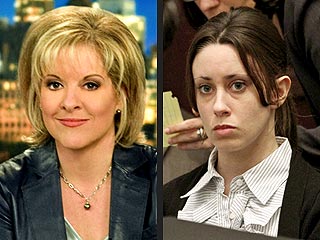
    This blog post is the only commentary I will make on the subject of the verdict in the Casey Anthony trial. You may feel free to comment on this post, but do not expect that I will respond.

    I have spent the last three years studiously ignoring the Casey Anthony case. My general position regarding show trials has been, ever since the O.J. Simpson case, that I have no interest in them. I have never sat in judgment in such a case as a member of a jury, and for a variety of reasons I never will. (If you don’t understand why, ask a prosecutor or a criminal defense attorney.) I also recognize no broader obligations of citizenship that would compel me to familiarize myself with the facts of such cases and offer an inexpert opinion on the defendant’s guilt or innocence, the prosecution of the case, or the appropriateness of the jury’s verdict. In the present instance, I am not and have never been a resident of the state of Florida, and I know next to nothing about the prevailing criminal laws, rules of criminal procedure, and rules of evidence. From the standpoint of a concerned citizen, I am far more concerned with macro-level statistics about criminal justice systems: things like racial disparities in incarceration rates and sentencing, irrationalities in mandatory sentencing guidelines, and so forth.

    So, suffice it to say that I have made it so that I don’t know enough about the Casey Anthony trial to offer any kind of judgment on the jury’s verdict. I will leave that to others with more knowledge of the case and/or more relaxed epistemic scruples.

    I do have one remark to make, though, on the opinion, widely reported as uncontroverted fact, that the verdict was somehow a “bombshell” or a “surprise.” I know a fair few attorneys. I did not conduct a poll of them all prior to the verdict, but from those who did comment in my presence, a consensus emerged around three points:

    1) Casey Anthony is most likely guilty of murdering her daughter.

    2) The prosecution did not meet its burden of proof beyond a reasonable doubt in this case.

    3) Casey Anthony would probably be acquitted.

    This consensus correctly predicted the outcome of the trial. Personally, since this consensus was expressed by multiple attorneys I trust and respect, I would have been surprised if the jury did convict. My impression is that the only ones who can claim to be blindsided by this verdict are a) those in the media who, for pay, have crafted a narrative whose only logical endings are Casey Anthony’s conviction or boundless outrage at her unthinkable acquittal, and b) those who have uncritically adopted that narrative as their own. My cynicism also leads me to speculate that those media figures who were most invested in the story knew full well that the jury was likely to acquit and so hyped the certainty of her guilt and eventual conviction as a way of manufacturing outrage at the outcome and driving ratings even higher.

    No, wait, no one in the media could be that phony, that callous, that manipulative.

    Could they?

    No, really. Could they?

  • On Drinking the Electric Tablet Kool-Aid

    So, tonight I went out and bought an iPad. After all of the fun I have made of people who went out and got these things, I now have one and am tapping out a blog post from it.

    A blog post about buying an iPad.

    Seriously, I have never wanted to kick my own ass more than I do right now.

    And yet I love this thing so far. It has me typing out a blog post on the spur of the moment, something I haven’t done in God knows how long. Typing on the screen isn’t as bad as I had feared either. I’ve been told by multiple parties that for serious typing one needs to get a keyboard, but so far light typing is pretty OK.

    So. let the razzing begin! I will respond to all commenters on…my iPad!

  • Three Serious Questions

    I have three serious historical questions for which my smart, wise friends may have answers. Here goes:

    1. Does the Hebrew Bible, and in particular the Torah, state a prohibition against lending out money at interest? Or, more generally, was lending out money at interest generally prohibited or frowned upon in ancient Israel and Palestine?

    2. If the answer(s) to the above is/are “yes,” was lending out money at interest a prevalent practice in ancient Israel and Palestine nonetheless (that we can know)?

    3. When did lending of money at interest start to become a widely accepted practice in Europe?

    I have a vague version of history in my head that goes like this: For most of human history, and in most places, lending out money at interest was prohibited or considered morally suspect, since it encourages idleness and accelerates concentration of wealth. The modern era in Europe, however, reinforced the notion that lending at interest was morally neutral and sometimes morally praiseworthy.

    My problem is that I don’t know how much of my vague version of history is, y’know, true.

    Who can help out here? Please comment!

  • The Semantics of Slurs

    A recent Facebook post from a friend on the Dr. Laura Schlesinger “n-word” episode sparked an interesting discussion. Like me, he is a philosopher (but unlike me, he is paid to be one). He stated the thesis that no one should use the n-word, not even African-Americans. His stated reason for this view, which I think is reasonable and with which I agree, was as follows. The n-word fails to denote any object; it is in a class with nonsense words such as “toovy” and “teavy.” Given that the word is normally used in strongly pejorative contexts, as a way of degrading the individuals to whom it applies to something like sub-human status, it follows that, since African-Americans and persons of color are fully human, the word fails to pick them or anyone else out. Whatever a n—— is, there just is no such being.So, in actual use, paradigm protocol sentences such as “So-and-so is a n—–“ fail to have a truth value; they are not simply false, but senseless. My friend quoted the authority of Rudolf Carnap in support of this latter claim. So, since the word fails to denote, it cannot a fortiori have any connotation, negative or positive. So the word should not be used. It is senseless to use it.

    This did, and still does, strike me as a mistaken analysis of the n-word. I was, and still am, puzzled by the claim that the word fails to denote. I take denotation here to be roughly the same thing as semantic reference: if a word, under some specified interpretation, picks out some entity or entities, the word refers. For formal languages, interpretations are usually stipulated; for natural languages, interpretations are read off typical language use. I take my friend’s claim to be equivalent to saying that the n-word does not, in typical language use, pick out any entity whatsoever. It is this claim which I believe to be wrong.

    My friend’s analysis presupposes that in use the n-word is a count noun, like “chair” or “tree,” such that it could occupy the predicate position in a protocol sentence of the form “x is a y.” It is this presupposition, though, that I believe is incorrect. Well, not entirely incorrect; I think the word is also used as a count noun. I just don’t think that the paradigm cases that concern most people are uses of the word as a count noun. Instead, the uses that are the most paradigmatically bigoted and offensive are uses of the word as a slur. Slurs differ from count nouns in that slurs are used, not to describe a class or as a means of attributing class membership, but instead to make individual reference, like a name. This function of slurs is captured by the common English phrase “calling someone names” as a euphemism for addressing someone with slurs. Slurs are not proper names, like Brian Cubbage—a highly relevant fact, about which more below—which can make it easy to mistake them for count nouns. For that matter, slurs can be used as count nouns as well, muddying the waters even further.

    So how can the n-word, considered as a slur, refer in a situation where the n-word, considered as a count noun, cannot? For that, we need to consider the reference of names, since it is in virtue of their semantic reference that slurs are like names. Perhaps the single most famous—and in my opinion most compelling—analysis of this subject is to be found in Saul Kripke’s (1972, 1980) Naming and Necessity. Kripke takes aim at that other most famous theory of the reference of names, Bertrand Russell’s theory of names in “On Denoting” (1905). Russell’s theory holds that proper names are disguised definite descriptions. On that theory, proper names are actually synonymous with definite descriptions, such that one can salva veritate replace the name with the appropriate definite description in sentences where names occur. Kripke famously contends through a series of arguments that this account of proper names doesn’t adequately capture the work that names do. His reason is that no single description, or even a cluster of descriptions, can be said to describe necessary properties of an object, such that no set of descriptions can be said to fix reference necessarily. Names, however, fix reference necessarily by stipulation: People use names to pick out an individual regardless of her properties, contingent or necessary. Using Richard Nixon, then the President of the United States, as an example, Kripke argues:

    Suppose that someone said, pointing to Nixon, ‘That’s the guy who might have lost [the election]’. Someone else says, ‘Oh no, if you describe him as “Nixon”, then he might have lost; but describing him as the winner, then it is not true that he might have lost’. … The first man would say, and with great conviction, ‘Well, of course, the winner of the election might have been someone else. The actual winner, had the course of the campaign been different, might have been the loser, and someone else the winner; or there might have been no election at all. So, such terms as ‘the winner’ and ‘the loser’ don’t designate the same objects in all possible worlds. On the other hand, the term “Nixon” is just a name of this man’. (41)

    To describe this particular reference-fixing function, Kripke introduces the concept of a rigid designator. “Let’s call something a rigid designator if in every possible world it designates the same object” (48). Kripke’s position is that a proper name like “Richard Nixon” rigidly designates an individual who actually was President in 1972, but might not have been; it even designates him regardless of how things might have been with him, even if his parents had never met and he never existed. It even designates him in a possible world in which he existed but wasn’t actually called ‘Richard Nixon.’

    Kripke’s full argument for his theory that names are rigid designators is wide-ranging, and I won’t address its full extent here, much less its subsequent development into a “two-dimensional” theory of reference in later philosophy of language. Suffice it to say that I find Kripke’s picture convincing. On it, names are more akin to demonstratives like “this” and “that” than they are to count nouns. Unlike demonstratives, though, whose reference is completely context-bound, a name undergoes an “initial baptism” that influences but does not entirely predetermine its subsequent referential history; a thread, however tenuously stretched, ties the name to its referent across multiple contexts. On this theory, it is not particularly difficult for a name to have a reference; in fact, it’s almost too easy. As long as I am able to baptize it and its subsequent use does not break the direct referential tie, I can use pretty much any word as a name, even if the word had some other meaning at the time of initial baptism or (especially) if it had no other meaning at all.

    What does this theory have to teach us about slurs? Slurs like the n-word, like names, have a referential history. In fact, it is precisely their history as terms of direct reference to people that deserves attention, understanding, and condemnation. It is precisely because of the fact that slurs hit their referential targets, and that they have the targets that they do as a result of a history of specific actions of hatred, oppression, and violence, that they are able to hurt anyone. The n-word is baptized in blood, in a history of lynchings, cross-burnings, and institutional discrimination from which we have not distanced ourselves to the extent we think we have. Slurs can, with work, be reappropriated by their customary targets and, their referential history broken, rebaptized anew, as has recently been done with the word “queer.” The fact remains, though, that such acts of reappropriation take work, and they are not always successful.

    Yet, as I mentioned before, slurs are not quite proper names. In ordinary use, if someone says “Brian Cubbage,” it is abundantly clear without knowing anything about her state of mind or other elements of her context that she means to refer to a single person—the name functions as a “rigid designator” in Kripkean parlance. Not so with slurs. If I were to overhear someone on the phone, for example, say to the other party “Hey, n—–,” I wouldn’t be able to infer the specific identity of the person on the other end of the conversation without more information.  Still less would it make sense to tell such a person that she had mistakenly applied the slur in the same way that it would, for instance, make sense to tell someone that the person she is calling Brian Cubbage is really Brian Boitano. It seems perverse to tell someone that she is mistaken in calling someone a n—– because, well, there are n—–s, but this person isn’t one of them. The perversity isn’t because the n-word lacks reference, but instead because it misses the speaker’s referential impact, the point of why the speaker is using the n-word in the first place.

    I offer that slurs like the n-word have an intermediate referential status somewhere between proper names, count nouns, and demonstratives. Like names, they refer directly to individuals, but unlike names, they do not do so rigidly. Instead, they do so in a way that is meant to reduce and deny the individuality of the person designated by them, even while they depend for their effect on their hearers knowing to whom they refer in any particular context of use. In fact, they only enjoy relative context-independence; they are linguistic actions par excellence, a way of doing something with a word. They are like demonstratives in this way. Slurs are reductive: They pick out an individual, but they do so only to reduce her to just another member of a group to which an indefinite number of others belong. In this way, they are like count nouns. Slurs occupy a unique, complicated position in the language.

    It is no wonder, then, how slurs can gain so much power and can cause so much damage.

    If Dr. Laura’s senselessness has done anything besides give Sarah Palin an opportunity to demonstrate that among the numerous things she doesn’t understand is the First Amendment, it’s given us an occasion to reflect on why it is that, in our putatively “post-racial” times, racial slurs still have the power to hurt and pollute.