Tag: jane-austen

  • The Dualities of Jane Austen

    The Dualities of Jane Austen

    No author’s subsequent reception best exemplifies the two strategies for reading fiction I described in an earlier post than that of Jane Austen.

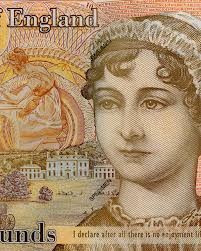
    On the one hand, Austen’s works, especially perennial favorites such as Pride and Prejudice and Sense and Sensibility, have served millions of readers as a lens for bringing their own wishes, desires, and sense of themselves into greater focus. The dramatic romance of Elizabeth Bennet and Fitzwilliam Darcy, and the differently satisfied hopes of Elinor and Marianne Dashwood, continue to serve millions as a source of wish-fulfillment and literary identification. They have also left their indelible stamp upon the contemporary genre of the romance novel, many of whose cherished tropes, including the marriage plot and the necessity of the “happily ever after,” took their most recognizable forms with Austen. This aspect of Austen’s work has inspired an entire catalogue of imagined sequels, narrow or liberal rewritings and recastings, television and film adaptations, and literary festivals, not to mention the innumerable echoes of Austen throughout popular culture. Austen’s face even graces the back of the £10 note in the UK, on the other side of King Charles. Austen’s work is, for many, a door which beckons them to enter into and inhabit another world, an imagined one of greater gentility and courtesy, a world which in turn prods us to imagine our own world as something better.

    The world depicted by Jane Austen, though, is, for all the relatability of its emotional content, not only very different than our own, but is also skillfully and minutely realized in its psychological, sociological, and historical details. Austen’s novels afford a point of entry into the state of men’s and women’s fashions in the Regency period of English history; the wide variety of carriages, coaches, carts, and other conveyances, and the roads on which they travelled; the societal and economic changes brought about by England’s developed colonial economy and by the Napoleonic wars, and in particular the fortunes made by naval officers in that conflict; and the English laws of inheritance, just to name a few. Far from just being background scenery, these aspects of Austen’s novels are regularly central to their plots and themes. More broadly, Austen’s novels portray the wide variety of constraints under which women in the Regency era lived their lives—the vast, nuanced network of social expectations shaped by wealth and class, economic and financial constraints (or the lack thereof)—and the way in which Austen’s characters imagine their own agency and choices in light of those constraints and reimagine and reconfigure those choices. Austen criticism in this vein draws insight not only from history at large, but also from Austen’s own biography and correspondence and the biographies of her family and other relations. Austen’s work, in other words, is a rich trove of cultural artifacts that one can unpack, examine, and relate to other such artifacts, and Austen criticism has risen to that task.
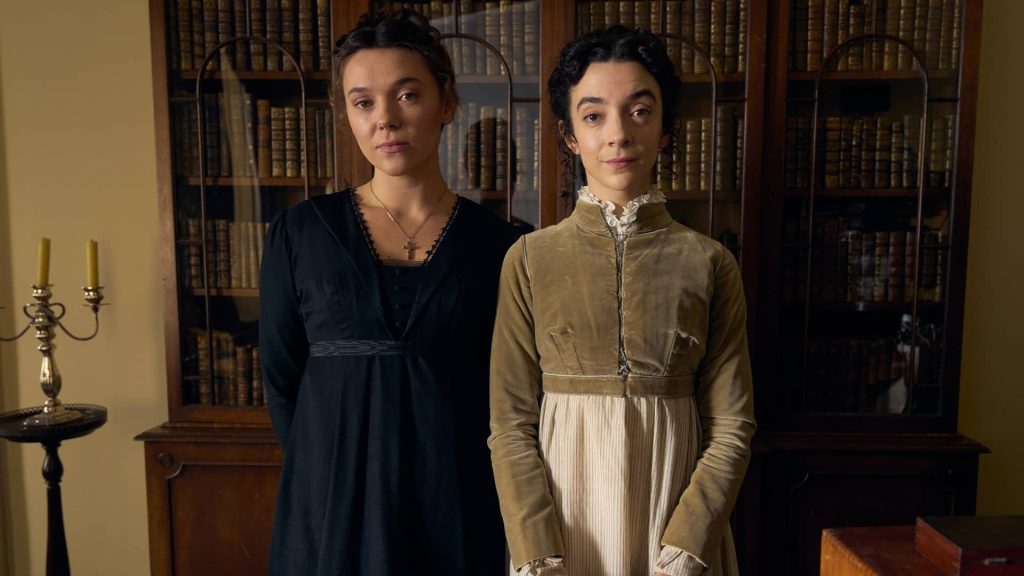
    Cassandra Austen (Synnove Karlsen) and Jane Austen (Patsy Ferran) from the recent BBC adaptation of Gill Hornby’s novel Miss Austen, which attempts to imagine the circumstances behind Cassandra’s famous destruction of much of Jane Austen’s correspondence. The search for biographical clues to the significance of Austen’s work has certainly survived the “death of the author.”

    At the extremes, these two ways of reading Austen can lapse into one-sidedness or into apparent conflict with one another. Readings of Pride and Prejudice that over-identify with Elizabeth Bennet or merely use her as an imaginative prop for the reader’s own fantasies, on the one hand, clash with readings of the novels that see them as a collection of historical details organized loosely around a plot. As I said in my previous post, though, I don’t think these two strategies of reading fiction, and in particular of reading Austen’s fiction, need necessarily conflict. In fact, I am not convinced that any real engagement with Austen’s work can dispense entirely with either strategy. What makes Austen’s fiction so good is that the two poles towards which each strategy of reading gravitates—the inner life of imagination and the emotions, the outer world of society and history—are woven together in it into such tightly integrated wholes that one almost has to do perform surgery upon the texts, if not do violence to them, to extricate one or the other element.

    Each of Austen’s finished novels could serve as an illustration of this point, even the widely exposed and thoroughly commented-upon Pride and Prejudice. The best single illustration of it, though, is Mansfield Park, in part because, whatever else one might say about it, it is definitely not a wish-fulfillment story. Which isn’t to say that it’s a tragedy. Its heroine, Fanny Price, does end up with her “happily ever after,” such as it is. Austen treats the ultimate steps whereby she obtains her happy ending, though, in such a cursory fashion, almost as in an epilogue, that they are obviously not Austen’s focus. Austen’s interest lays just to one side of rendering Fanny Price, and us as sympathetic readers of her tale, contented and happy. It is this tension between Austen’s narrative aims and the sympathetic reader’s expectations that makes Mansfield Park such a rich, and in some ways disturbing, work.

    ***

    Austen’s heroines can be said to strike one or the other of two postures in her fiction. Austen herself announces the distinction in the very title of her first-published novel, Sense and Sensibility. On the one hand, there is the posture of good sense. Elinor Dashwood exemplifies this in Sense and Sensibility: cool, reasonable, grounded, aware both of her own feelings and the feelings of others, considerate, eager to keep herself and her actions within the bounds of proper conduct, ready to exhort others to proper conduct but not controlling, manipulative, high-handed, or sanctimonious. Often the Woman of Sense (as we might call her) is surrounded by characters who exist on a spectrum from the merely silly to the hypocritical and pig-headed. Anne Elliot in Persuasion, for instance, is the island of good sense in a family of vain, fatuous nincompoops. The Woman of Sense is not an unfeeling robot—her good sense is unimaginable without a significant degree of what we might today call “emotional intelligence”—but her judgment and actions are not controlled by her emotions. The Woman of Sense feels, and feels deeply, but is armed with self-knowledge and hence is able to keep her search for what she wants for herself within the bounds of propriety. After all, getting what one wants at the cost of burning one’s bridges with one’s family and friends and flouting the good opinions of society is, for the Woman of Sense, very much like not getting what one wants at all.

    We see the opposite tendency in Marianne Dashwood, the personification of “sensibility” in Sense and Sensibility. In the idiom of early 19th-century English, being “sensible” doesn’t mean what it means in contemporary English, where it connotes clear-headedness, modesty or lack of extravagance, or sure-footed rationality. In Austen’s idiom it connotes almost the opposite, something more like “susceptible to powerful emotions” or “impressionable,” possibly to the point of self-indulgence. (I have to assume that this usage of “sensibility” owes a great deal to early modern psychological theory, itself indebted to the Aristotelianism of Scholastic philosophy and theology, which viewed emotions as “passions,” that is, states which the soul passively undergoes, as opposed to the “active” intellect.) Marianne is “sensible” in that she feels everything deeply and intensely, forms emotional attachments quickly, speaks and acts impetuously, and sets great store upon poetry, music, nature, or other pursuits that go beyond the realm of the immediately practical such as dancing, balls, and parties. The Impetuous Woman (let’s call her that) is not necessarily foolish, although she can be; Lydia Bennet in Pride and Prejudice comes to mind. She can in fact be quite clever, possibly smarter than most of the people around her. Emma Woodhouse in Emma is the perfect example: more vivacious and witty than any of her female company, but an Impetuous Woman nonetheless in her commitment to her ill-starred match-making projects.

    I call these two general tendencies of character in Austen’s heroines “postures” because they aren’t necessarily mutually exclusive. Character isn’t necessarily a fixed quantity; Austen’s heroines aren’t allegorical figures who wandered in from Pilgrim’s Progress. Typically it’s the Impetuous Women who either gain hard-won sense (Marianne Dashwood, Emma Woodhouse) or follow their feelings into disgrace (Maria Bertram in Mansfield Park). However, in her last completed novel, Persuasion, Austen gives us the story of Anne Elliot, another Woman of Sense who allows herself in youth to be persuaded out of a marital attachment that her family views as risky, only to learn to trust and follow her feelings when her beloved returns to her life. The Woman of Sense in Persuasion learns when to set aside presumed good sense in favor of intuition and emotional receptivity.

    Anne Elliot (Amanda Root) and Captain Wentworth (Ciarán Hinds) from the 1995 BBC adaptation of Persuasion. I view this adaptation as superior to the others for its balanced portrayal of Anne.

    Austen’s consistent preference, though, is for the Woman of Sense. Elinor Dashwood, and especially Elizabeth Bennet, are definitely spirited heroines, but in them good sense prevails. Each one exhibits awareness of others and, crucially, self-awareness. Awareness, however, doesn’t always imply actual knowledge; many of the decisive junctures of Austen’s plots involve the Woman of Sense being forced to act in situations of imperfect or incomplete knowledge of all of the relevant facts. (Elizabeth Bennet’s misjudgment of Mr. Darcy and of Wickham in Pride and Prejudice, and her consequent actions, are just the most well-known example of this.) The Woman of Sense is, however, best poised to profit from getting a more complete view of the facts, and least likely to act precipitously in the absence of material facts, and in Austen’s world this tends to allow her to emerge from sticky situations with a minimum of damage. Although Marianne Dashwood’s reproach of Elinor as cold, unfeeling, and unsympathetic in Sense and Sensibility is, and is portrayed as, unjust, there is an element of justice in Marianne’s complaint, perhaps; the Woman of Sense perpetually runs the risk of being priggish and convention-bound.

    This is, in fact, just the view that much of the critical literature on Mansfield Park takes towards Austen’s consummate Woman of Sense, Fanny Price. She’s dull, she’s too passive, she is less interesting than the novel’s more spirited foil, Mary Crawford. Yet I find this reading of Fanny Price and Mansfield Park unnecessarily restrictive.

    In my next Austen post, I will explain what I think Fanny Price really represents and why I find her, and the story of which she is the protagonist, are Austen’s richest creation.

  • Two Strategies for Reading Fiction

    Two Strategies for Reading Fiction

    My latest reading project has been completing the fiction of Jane Austen. In order to organize my thoughts about Austen’s works themselves, I found myself needing to clarify, as a sort of preparatory exercise, my thinking on two different, but interrelated, strategies of reading. If you are interested in theory or abstraction, may you find this helpful or at least of mild interest. If you aren’t, expect some writing about Jane Austen in the coming weeks.

    Although it’s probably an oversimplification, I often entertain in my own thinking a distinction between two strategies of reading fiction. This distinction helps me make sense of not only my own reading, but also the proliferation of discussion of it in our times.

    The first such strategy I call reading as a technology of identity consolidation. This strategy of reading centers upon the reader’s wants, desires, wishes, social location, and agency. The questions to which it seeks answers in fiction center partly on satisfaction—Am I enjoying the experience of reading this book? Do I like the characters? Do I identify with them? Do I find them “relatable”? Does the work help me to confront, or perhaps to escape, aspects of my own reality I find oppressive? Do I think the author is someone I might like? Some of what this strategy seeks to get out of fiction, though, can involve personal aspiration or improvement: Does this book provide role models to help me shape and direct my ambitions? Is the author telling a story that, for political or ideological reasons, I think needs to be told to a wider audience? Is the author exploring some aspect of identity that is underrepresented in fiction, and doing so in a way that supports ideals of dignity and increased understanding?

    The common thread running through this diverse set of questions and expectations is, I believe, a singular preoccupation: How can fiction help me be the sort of person I should be, by helping me figure out who I really am, how I should act, what I should do, what I should believe? In other words, its preoccupation is the reader’s sense of their own identity, and the critical touchstone it recommends is the extent to which a book helps or does not help achieve that goal. (Also, by implication, it can evaluate books based on the extent to which the book or its author are compatible with the sorts of political or moral aspirations we should have, which lends this attitude towards a certain censoriousness about books that is no doubt familiar to anyone reading this on the Internet in 2025.)

    I call this sort of reading a technology because, on this view, the work of fiction is a sort of tool or device the reader uses to achieve other goals that go beyond the work of fiction itself. What’s more, reading fiction is not even the sole means to achieve those goals; other people who aren’t devoted to reading achieve them by watching movies or television, chatting up strangers on the Internet, backpacking across the American West, or some other thing. Perhaps reading fiction is the best way to figure out who you are and who you want to be, or at least has certain advantages over other ways[1], but it isn’t the only way.

    Although the most recent public site where this strategy of reading is on full view is undoubtedly #BookTok and its related social media communities, the strategy of reading as a technology of identity consolidation is by no means new. The explosion of the novel as a popular literary form in the 18th century in Europe, and its appeal to young, impressionable people living through the upheavals of the crumbling of absolute monarchy, Sturm und Drang pre-Romanticism in culture, and a general transformation in how the world appeared to intellectuals[2], led to a sense of moral panic not dissimilar to those that swept post-World-War-II America. When novelists of the 19th century incorporated the pitfalls of this kind of subjective investment in reading fiction within fiction itself—Catherine Morland in Jane Austen’s Northanger Abbey and Emma Bovary in Gustave Flaubert’s Madame Bovary are two salient examples—they were already taking place against the backdrop of a social debate with a long history. By the mid-20th century the cultural place of the novel was well cemented, but Vladimir Nabokov, himself no opponent of fiction, was lampooning what he polemically took to be the excesses of “bad reading” (reading aimed at identification with characters, concentrating on the “socio-economic angle,” etc.) among his students and contemporaries.[3]

    While I agree that a singular focus on fiction as a technology of identity consolidation is limiting, I don’t reject it entirely or think that it is an illegitimate way of reading across the board. For what it’s worth, I think that this strategy of reading represents something ineliminable from anyone’s experience of, and interest in, reading fiction. I will return to that point below.

    For now, I will be content to contrast this strategy of reading fiction with another I call reading as an inquiry into cultural artifacts. This strategy of reading tends to bracket the reader’s personal identitarian investment in, or response to, the work of fiction and instead seeks to appreciate the work of fiction as an artifact embedded in its own multilayered context. The implied metaphor of an archaeological dig is deliberate, as the work of fiction’s contexts are numerous, interrelated, and take sometimes dirty work to decipher if one is to do it well. Reading fiction as artifact can, for instance, dwell on the author’s broader aims: Is the author preparing a brief for a moral or political case? If so, what is it, and does the work forward that goal of persuasion? How does the work relate to other work by the author—as a departure, a continuation, a repetition? Does the work reflect the author’s inner state or personal biography, and if so, how? Some of its questions are the familiar territory of academic literary criticism: What are the work’s structural or formal qualities, and how do these qualities relate to other works? What are the inherent aesthetic qualities of the work, and on what standards might we judge its quality? How does the work relate to similar works produced in a historical time, place, or era? Some of the questions this strategy of reading asks veer off into history, philosophy, sociology, economics, and other social sciences: What factual information does the work of fiction tell us about its time (even if “its time” is right now)? What does it convey to us about what it was like to be a subject in its time and place: the characters’ sense of their own agency and choices for action, how they imagined themselves and their world (and sometimes the distance between their imaginations and reality), what sorts of radical options were open to them or foreclosed?  How was the book read (or misread), received or rejected, in ways that illuminate both the work itself and its subsequent history? Does the book illuminate or provide unique traction on a philosophical problem, like free will, the nature of justice, or religious belief?

    Obviously, what I am calling the strategy of reading as an inquiry into cultural artifacts is a wide umbrella over a vast range of diverse interests, questions, and curiosities. It covers the aims of the hack political pundit’s obtuse commentary on contemporary novels, the integrative work of the cultural critic or public intellectual, and the minute, detailed research of the humanities academic. I know full well that many people whose interest in fiction lies in the general direction I am describing would chafe at being associated even loosely with some of the other preoccupations I am grouping together under this umbrella. This strategy is far too broad to be called a “method”; it’s more a general orientation, a tendency.

    I don’t call the strategy of reading fiction as a cultural artifact a “technology” because, unlike the strategy with which I am contrasting it, the work is not being used as a tool or an implement to achieve an end. However, it does share with that technology of reading, though, a certain tendency to lose focus on what we might call, in an old-fashioned sort of way, the “work itself.” Reading as a technology of identity consolidation tends to view the work as a sort of mirror or lens that is trained squarely upon the reader’s selfhood. The properties of the mirror or lens only matter to the extent that they help the self see itself more clearly. Reading as an inquiry into the book as cultural artifact, though, tends, at its extremes, to dissolve the work itself into a mere set of illuminations of its contexts, as one more data point in the service of a broader thesis about whatever historical, philosophical, or sociological interest the reader brings to the work.[4]

    Fiction writers themselves have perhaps been less worried about the drawbacks of this attitude towards fiction than about the drawbacks of its contrasting attitude. Certain fiction authors and works certainly portray the dissolution of the traditional novel into other discourses and registers, though. The most well-known examples are the works of modernist authors like Joyce or Beckett, but there’s also Tolstoy’s War and Peace, a fictional work (Tolstoy denied it was a “novel”) which shades over its great length into a work of history and philosophy. At the extreme, we have the French nouveau roman as well as Burroughs’ cut-up trilogy, with long passages that consist of literal cut-up and scrambled texts from newspapers and magazines (and which Burroughs also denied were “novels”).

    I must confess that the habits of mind that govern my choice of fiction reading tend more towards the appreciation of fiction works as cultural artifacts than towards identity-consolidation. (Perhaps being a middle-aged man who thinks he is blessed with an adequate degree of self-awareness explains this: I am not looking to fiction as a form of therapy or to figure out who I am, or even to get away from who I am.) But I am not personally above reading fiction that is escapist, or relatable, or blatant wish-fulfillment, or just plain entertaining. In the end I suspect that these two strategies of reading I have identified can scarcely be divorced from one another entirely. For lack of a better terminology, the subjective pole and the objective, the personal and the impersonal, care of the self and concern for the world, can’t be pulled apart neatly. Both sets of motivations and interests confronts all of us when we read fiction to some extent. They are like the charged electrical field in the midst of which we engage with the work of fiction, which then blocks, amplifies, reflects, and redirects those energies into different directions.[5]

    When it comes to talking about fiction and literature, what I abhor is the insistence on a single strategy of reading as the only one that is worthwhile, or else the sheer predominance of a single strategy of reading by the volume of commentary and conversation that exclusively presupposes it. (If you haven’t guessed, I endured maybe ten minutes of browsing on #BookTok before abandoning it in frustration.) I am, generally speaking, a maximalist when it comes to reading, a “let a thousand flowers bloom” sort of person. I sometimes intentionally seek out negative reviews of books I love, and sometimes they even change my mind. When they don’t, I still find them instructive as idiosyncratic readings or misreadings. When people present me with excessively rigid reading methodologies or otherwise seem to have a perpetual blind spot in their critical judgment, I just think, “Hm, OK,” and then keep on reading what I want for whatever reasons interest me.

    With all that in mind, my next post will reflect on the one author whose public and academic reception in modern times best exemplifies both of these strategies of reading at once: Jane Austen.


    [1] Reading novels certainly entails less physical risk than embarking on a career of libertinage among the demi-monde of Paris. To pick an example.

    [2] One of the central theses of Michel Foucault’s The Order of Things is the transition of episteme he identifies in the late 18th and early 19th centuries, in the very way that the discourse surrounding knowledge was subtly reorganized and transformed.

    [3] Vladimir Nabokov, “Good Readers and Good Writers,” in Lectures on Literature (ed. Fredson Bowers; New York: Harvest, 1980), 3ff.

    [4] Yet another target of Vladimir Nabokov’s critical polemic in “Good Readers and Good Writers” are people who insist on using Jane Austen’s novels as a source of information about “landowning England with baronets and landscaped grounds when all she knew was a clergyman’s parlor” (p. 2).

    [5] Without getting too far into it, I suspect that the relation between these two strategies of reading is broadly dialectical (though not in a rigidly Hegelian or Marxist sense). What I will say is that, pace certain cultural critics who have dotted the landscape throughout my lifetime, I am not convinced that either strategy is inherently prone to, or exclusively guilty of, the closed-mindedness, epistemic closure, or sheer obtuseness significant swaths of the reading public constantly exhibit. Reading for escapism or sheer entertainment value can teach one things about oneself and the world that one didn’t know before (maybe even things that one doesn’t really want to know at all), or it can simply reinforce one’s existing feelings and prejudices. Reading for aesthetic merit or for cultural significance can lead one to broader insights about the world and one’s own place in it, or it can devolve into a rigid exercise in policing the boundaries of a canon or an interminable collection of grist for one’s preferred mill. What makes for this difference is a more basic personal disposition on the part of the reader, not the strategy of reading they employ.