Tag: news

  • The Victory of Armed Lifeboat Politics

    The Victory of Armed Lifeboat Politics

    This piece is one of the myriad “why did Trump get re-elected” pieces out there, but I originally began writing it about a month before Election Day. Back then, it was obvious that the election would be close, and I set myself the task of wondering why. My conclusions represent, though, the grappling I have been doing since 2016 with Trump and his continued presence in US politics.

    I propose a fairly broad explanation for Trump’s re-election: Trump was re-elected due to the anxieties produced by climate change and its consequences. I think that the other rivals I am seeing for explaining the election—racism, misogyny, economic anxieties—are all part of the picture, but the real driver here is climate change. It’s a broad theory, but I want to signal at the outset that it’s a tentative theory also. I don’t feel confident that I have every aspect at play here identified or given the proper weight. All of which is to say: take this as the tentative offering it is; if it helps, great; if I have gone astray, I am certainly open to hearing about it.

    I

    In his 2016 book The Great Derangement: Climate Change and the Unthinkable, novelist Amitav Ghosh argues that part of the failure of humanity and its institutions to contend with climate change is a deep failure of our personalistic, “novelistic” narrative expectations, which were created in the modern era at the dawn of capitalism, to reflect the supra-personal processes that drive climate change. Ghosh’s book is written in the first instance as literary criticism. It asks the question, how would the narrative expectations of the novel have to change in order to give the popular imagination the tools it needs to make climate change a human and tractable problem?

    Theories already abound for what led to Donald Trump’s victory in the 2024 Presidential election this past Tuesday. Most I have heard seem compelling, so far as they go, but something still eludes those of us who desperately need a narrative to explain what happened. I have come to think that what is eluding us is that very same narrative limitation Ghosh diagnoses in the contemporary novel: the difficulty of crafting a narrative that relates climate change to our other political concerns. I have come to believe that the chief reason Trump won was, incredibly enough, the fact that climate change is not only here, but is palpably worsening. Something is wrong in our country, in the world. Its effects are all around us, and yet we struggle to concoct a narrative that renders it available and urgent for people. Trump, though, managed to craft a narrative that captured the feeling of what is wrong. His narrative was—is—vague, riddled with lies and distortions, embroidered with seemingly every variety of bigotry, chauvinism, and plain meanness. It neither identifies the actual problem nor proposes any solutions for it. But—it’s a narrative that acknowledges the feeling of malaise and makes sense of it. Harris, and Democrats more generally, have struggled to craft a narrative that has the same urgency. A majority of voters simply went for the more compelling narrative.

    II

    In The Great Derangement, Ghosh briefly discusses the theory of Christian Parenti, author of the 2011 Tropics of Chaos, of the “politics of the armed lifeboat” in response to climate change. Poorer countries and countries in the global South are, whether by geography or political engineering, or both, especially vulnerable to the shocks of global climate change. Understandably one of the consequences is that, as climate change worsens, dwindling prospects for a livable future in poorer and hotter countries drive migration to wealthier and cooler regions. “Armed lifeboat” politics is a response to that situation: rather than working in collaboration with other nations to ease the impacts of climate change and work towards a livable future for all, wealthy nations in the global North “arm the lifeboat” by sealing their borders, shutting out immigrants, and preserving scarce resources for those already within their borders they deem most worthy.

    I contend that what we are seeing from the contemporary right—its embrace of nationalism and state sovereignty in its most violent forms; its isolationism and populism; its tense relationship with traditional laissez-faire upward-wealth-transfer conservatives; its professed distrust of elites—is best explained as “armed lifeboat” politics. The special mix of urgency and terror MAGA politics embodies is, among other things, an effect of, and response to, the realities of our warming climate as they begin to register in American society.

    But, you say, this can’t be correct! The contemporary American right has inherited from its right-wing ancestors the inability to admit that climate change is possible, much less than that it is already happening. How can an entire political movement be a response to something whose existence it officially denies? I think there are really complicated (possibly even psychoanalytical) answers one might give to this question. The simplest answer, though, is that the reality is there to be responded to, whether you acknowledge it for what it is or not. Trumpism of course doesn’t acknowledge climate change directly, because doing so seriously would entail that we adopt drastic, and likely strongly coercive, measures to reduce carbon emissions among the corporate class, who are the biggest polluters by a wide margin. What Trumpism does instead is to declare that certain of the symptoms of climate change—chief among them migration—are themselves the illness that needs fighting.

    Think about the MAGA contingent’s response to the recent disasters spawned by Hurricanes Helene and Milton for a moment. It wasn’t the standard line of Republican climate change denialism at all. That standard line is, or at least has been, to point to hurricanes and other climate disasters in the past and say that what we have now is just within the standard variations in climate we have experienced for hundreds or thousands of years, not to worry! Helene in particular made it difficult to take that standard line because it was so destructive in a part of the world so far from the coast. (That, and it would be impolitic during an election year in a swing state to tell its disaster-stricken residents that a storm the likes of which had not been seen in that area in recorded history was somehow “normal.”) Instead of the standard climate change-denialism line, the American right in the wake of Helene and Milton instead floated conspiracies that Biden and Democrats have the power to create and direct hurricanes towards communities that historically vote Republican. Liberals always on the lookout for a cheap shot observed that attributing a comic book supervillain’s weather control machine to Biden seems to sit ill with saying that human activity doesn’t influence the weather. But that’s the point: the MAGA contingent is shifting towards the recognition of human-induced climate change in the only way it knows how—by attributing it to a deliberate conspiracy by its enemies.

    The “weather machine” narrative is ludicrous, easily falsifiable in all its details. But—it’s a narrative. It puts a human face on what is otherwise a diffuse, complicated phenomenon.

    If I am right, I think we have to give Trumpism credit for one thing: its fear derives ultimately from something worth fearing. We should all be afraid of the already-beginning climate crisis. This doesn’t mean that we should be mastered by our fear or that we should lash out indiscriminately. Trumpism is dysfunctional politics because it is a “vibes only” kneejerk reaction to fear that only exacerbates the problems to which it responds. I suspect, though, that Trumpism is not the first political program that fails to deal constructively with the social ills that are really its enabling condition.

    III

    So much for what animates Trumpism. Why, though, does this have anything to do with why Trump won on Tuesday? Why did more Americans vote for the dysfunction, the callousness, and the bigotry of Trump than the alternative?

    I see two chief theories for explaining Trump’s victory, all of which I think have a certain merit. The first credits economic anxieties, and specifically the lingering effect of post-COVID inflation on household budgets. This is the “Milk and Eggs” theory. There are crude, reductive, memeified versions of this theory, of course, but before the election happened I shared an article by economist and historian Adam Tooze on Facebook that in a more nuanced way predicted that so-called “felt” inflation might have an impact on this election.

    The second theory credits racism, sexism, or the intersection of both known as misogynoir for Trump’s win. Due to the gender and race of his opponent, so this theory goes, America reverted to its endemic and systemic racism and misogyny to reject a Black woman candidate. Again, I find these explanations undeniable. America still struggles with the legacy of its historic anti-Black racism and its sexism, and Trump himself has a way of channeling, and normalizing, some of the most vile and reactionary strains of racist and sexist behavior to be encountered in the US. Trump’s campaign resorted to racist, sexist claims at virtually every possible juncture it could have done so.

    Why, then, would climate change be my candidate for why Trump won? Actually I don’t think it’s that simple. I think economic anxieties, racism (including racist attitudes towards immigrants), sexism, and other forms of bigotry all had an indispensable role to play in Trump’s winning the election. No explanation of what happened on Tuesday is complete without them. The deep fear and malaise caused by the pressure that climate change is putting on not just US society, but societies all across the world, though, is, I think, the anxious energy driving the US society to abandon the better angels of its nature and instead drag its historically bigoted attitudes back out of storage.

    Allow me to make an analogy to a hurricane. (It seems apt on so many levels.) A hurricane forms out in the ocean as at first a normal storm. Under the right conditions, that storm begins to rotate and draws energy off of warm ocean water, thus increasing in power until it becomes massive and powerful. Storms happen all the time, but it’s the other enabling conditions in the environment, chiefly the late summer heat trapped in the ocean, that make them into hurricanes.

    This is, I think, how the deep malaise Trumpists feel—the specter of “American carnage” from Trump’s first inaugural speech—becomes a phenomenon that breaks through the barricades formerly erected around the John Birch Society fringes of extreme right-wing politics. All of Trumpism’s bigoted politics is, as we are often reminded, of very old vintage as far as its substance goes. (The Harris campaign’s slogan “Not Going Back” was an apt acknowledgement of that reality.)  Trumpism becomes a widespread populist movement that utterly takes over one of the two major political parties in the US when it encounters that widespread, deep malaise and, like the storm drawing warm water off of the ocean, reinforces and redirects it. Racism and sexism are part of that energy too, as well as the blatant transphobia that Republicans generally exploited; their tools, their way of seeing the world, are ready to hand everywhere around us in the US. The whole thing then coalesces into a hurricane of more than 72 million people voting for someone who promises to wreck US civil society at large by promising to make a certain very white sector of society safer.

    IV

    The pressures of climate change on US society are, so far, still indirect and quite diffuse. This is what makes it hard for everyone to see them for what they are. Trumpists mistake the symptoms of the pressures for the pressures themselves, but at least they are feeling the pressures! Why Harris lost is, I think, that she and her most ardent followers failed to show that they feel any of those pressures very much at all. Something is deeply, fundamentally wrong in the US: a global crisis threatens to devour the world as it currently exists. While Trumpists might claim that the things that they think are wrong are caused by liberals (scapegoating is part of its fundamental error), liberals, whether consciously or not, communicate the message that the chief thing wrong in the US is…simply the Trumpists themselves and their fevered, bigoted imaginations. That’s the difference.

    Put differently, I think Harris’s chief message is that she was the defender of a competent, intelligently technocratic, benevolent status quo that, under Biden, successfully navigated us out of the COVID-19 pandemic and its economic aftershocks. True enough! But Harris’s vision was, truth be told, deeply conservative in its own way, and the Harris campaign’s active solicitation and promotion of its endorsements from the likes of Dick Cheney reinforced that impression. It’s also an appeal that reinforced liberals’ annoying tendency towards smugness, self-congratulation, and patronizing dismissal of its opponents. Nothing is wrong, the Harris campaign seemed to be saying, that we can’t fix with plucky grit and good cheer! If only those deplorable Trumpists would come to their senses and see how good and smart we are over here, there’s nothing we couldn’t do! It’s definitely a sunny, pragmatic, optimistic view of the world and its problems. (The contrast of this sunny optimism with Biden’s and Harris’s near-unconditional material support of Israel’s ongoing genocide in Gaza was jarring, but they hoped people wouldn’t dwell on that too much.) It’s a view of the world that isn’t afraid of anything, isn’t troubled by anything—except, of course, by people who are afraid and troubled and what they might do under the influence of a demagogic con man.

    Perhaps I sound unfair to liberals here. Maybe I am, at least a little bit. (We can often be hardest on those who are closest to us.) Aren’t liberals the ones who actually think climate change is real and are at least nominally willing to do something about it? Well, yes, but to hear most liberals I know talk about climate change, it’s just another one of those pesky problems that technocratic know-how and incrementalist solutions could lick in no time flat, if only their opponents would let them do it. Their talk about the problem is mostly couched in the anodyne language of NGOs: treaty targets for CO2 emissions, graphs of historical temperature changes, reports made by international bodies at fancy conferences. It’s rarely made concrete: half of Pakistan’s farmland flooded, villages in Germany and China wiped off the map, Asheville, North Carolina devastated. The Greta Thunbergs of the world who confront the measured pronouncements of international institutions with a concrete cry for urgency are subjected to endless mockery, and not just from conservatives.

    I think that at the end of the day voters in the US chose the candidate who is channeling a sense of something being deeply wrong, however utterly misdirected his unease might be, over the candidate who seemed to take offense that anyone could feel that way.

    V

    Let me be absolutely clear: I do not think that a majority of my fellow voters in the US were right to vote for Trump. I hope it is abundantly clear that I think Trumpism blatantly misidentifies the problems we face as a society and that his proposed “solutions” will only exacerbate the very real problems we have. The “armed lifeboat” will not save us. Harris would have been better; she is less erratic and malevolent and more sympathetic with the radically democratic deliberation that is, in my view, the best way out of the dangers of a warming world. She would have proven an obstacle to more progressive policies, as every Democratic president since 1980 has been. But she would have been less blatantly, obscenely bigoted, less authoritarian, less eager to sacrifice queer and trans folk as propitiatory sacrifices to quell the destructive forces they refuse to understand.

    Nor am I advocating for a facile, context-free “can’t we all just agree to disagree?” posture. If anything, I want the center-left in the US to be more confrontational, to start having the courage of its convictions! At the same time, the US center-left needs to cope with its addiction to cheap moral superiority. Sure, the memes and the John Oliver and Jon Stewart routines are funny enough, but they stand in the way of the deep listening and grappling we need to do. Deep listening involves paying attention to what the Trumpists say—and what they don’t say. The silences, the unintentional admissions, the rhetorical shifts. This task can, but need not, involve having conversations with Trump-supporting family and acquaintances. If your health and well-being don’t allow for those kinds of interventions, then by all means don’t. Block and unfriend and set boundaries however you must. (Lord knows I have!)

    Most of all, this is a moment for embracing a kind of deep humility. The difficulty of translating the climate crisis into a compelling human narrative knows no ideology. The isolationist right and the neoliberal left are struggling about equally with this problem from where I sit. I don’t have any sure-fire solutions to propose myself! The first step, though, is admitting we have a problem, as the saying goes. Once we admit our problem, those of us who care about having a future not structured around chaos and cruelty might even come up with a way forward.

  • Three Thoughts on the Felony Convictions of Donald J. Trump

    Three Thoughts on the Felony Convictions of Donald J. Trump

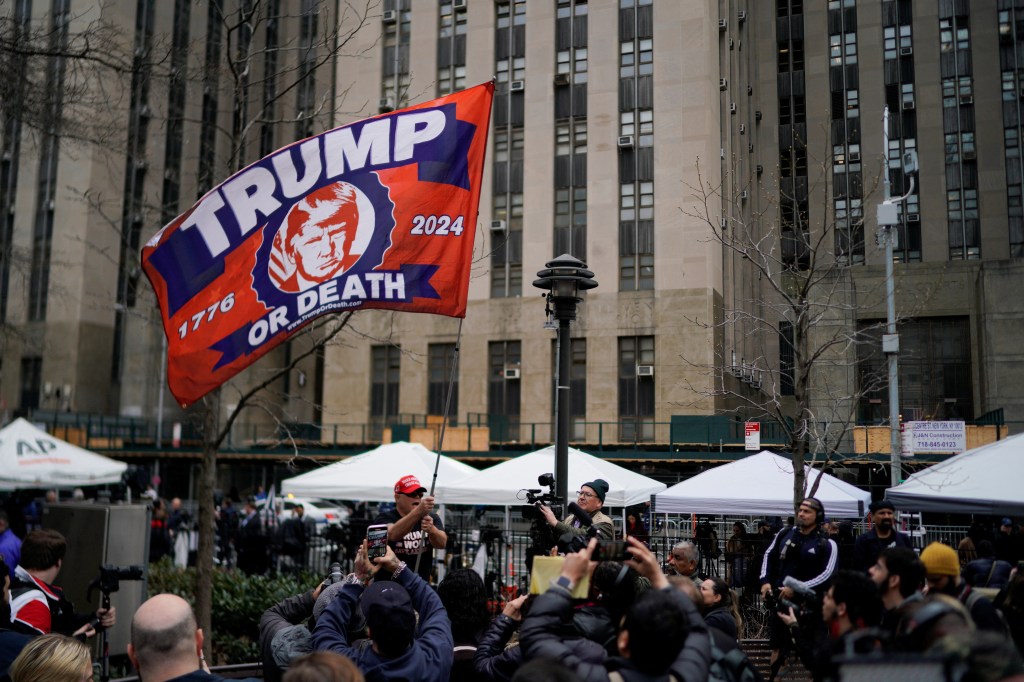
    Donald J. Trump, 45th President of the United States, was found guilty in New York state court on Thursday, May 30, 2024 of thirty-four felony counts of falsifying business records. His sentencing is set for July 11, 2024. He will no doubt appeal the ruling, but for now journalists can say without fear of libel charges that Trump is a convicted felon, indeed the first current or former President of the United States to be convicted of a felony.

    I not only have a thought about this historic moment, but I have three. In no particular order, they are:

    1.

    I am glad he was convicted. So glad. I mean, the guy is so transparently guilty, not only of this but of virtually everything else he is accused of doing. And yet I really have no profound appetite to see Trump go to prison, for the simple reason that I have no real appetite to see anyone go to prison. I am still thinking over whether I am a prison abolitionist, full stop, but I am pretty close to it. The vast majority of people in prison simply shouldn’t be there, not because they are all innocent of any wrongdoing, although there are plenty of literally innocent people in prison, and plenty more who are in prison for things that should have never been illegal, like possession of marijuana. (Not to mention the people who are in prison for far longer than they should be due to their race, due to mandatory minimum sentencing regimes, due to overcharging and the crushing pressure on criminal defendants to accept plea bargains.) Even for people who have done unquestionably bad things, though, prison, especially the way we do it in the US, doesn’t reduce crime in my view so much as it redistributes it inequitably, mostly along all-too-familiar lines of class and race.

    I understand the urge to gloat in seeing Trump, a man whose social commentary started with calling for innocent nonwhite teenagers, the Central Park Five, to be jailed for crimes they didn’t commit, a man who heads the “law and order” party in US politics despite being a transparent fraud, brought to justice by the very carceral state he longs to weaponize against, well, seventy-five percent of the country. But dislike and schadenfreude are, last I checked, not sufficient reasons for incarcerating someone. Nor are they sufficient reason for forgetting whatever other principles one might claim to espouse in calmer moments.

    I don’t want anyone to mistake what I am saying as in any way entailing that I sympathize with Trump’s political aims. Far from it. What I really want is for Trump, and for that matter every last one of his fellow travelers, to be kept well away from the levers of political power, now and henceforth.  Trump would just be one of US politics’ oddballs, a punchline like Ross Perot or RFK Jr., if it weren’t for the large swath of white Christian nationalists in the Republican Party who decided that he was their man. That white Christian nationalism has deep roots; arguably they reach all the way back to the nation’s founding.[1] Putting Trump in jail won’t pull his political movement up by the roots. It might temporarily impair Trump’s ability to serve as its rallying point. But it won’t even bar him from running for President in 2024!

    Republicans in the Senate could have removed Trump’s hands from the levers of power if they had just voted to convict him on impeachment charges after the January 6 insurrection. But they failed to do so out of sheer, craven cowardice, out of their desire to keep their offices at all costs even if it meant placating the very people who stormed the Capitol building with dreams of summarily executing the Vice-President of the United States if he would not abdicate his Constitutional responsibilities. The criminal justice system cannot erase that political dereliction.

    2.

    Trump’s influence over US politics is, above all else, infantilizing. This infantilizing influence not only affects his supporters, but also his most vociferous enemies. US politics did not need Trump, though, to be juvenile. American exceptionalism, an attitude by no means limited to Trump supporters, is an invitation to perpetual, self-obsessed political adolescence, of the belief that what happens here is utterly unlike what happens elsewhere. There’s also the fact that our putatively “democratic” politics is, as a structural matter, not only barely democratic from the standpoint of any functional concept of democracy, but our most vehement latter-day public defenders of so-called “democratic norms” seem to lose little sleep over this situation. “Democracy” in the US seems to be a matter of which team we most trust to maintain the largely insulated self-running machine of neoliberal technocratic institutions. On the one hand, there is the team, the Republicans, who delights in the inequities and opportunities for cruelty inherent in our form of government and seek to amplify them, and on the other, the Democrats, who at least have the taste to be ashamed of them and just hide the very same cruelty under a smiling cloak of secrecy and talk of dealing with “unpleasant duties.” So much of US politics is political kayfabe designed to fill the vacuum left by the fact that the scope of political choice available to the public is so thoroughly constrained.[2] Trump, the former wrestling performer, is a master of this exploitative kayfabe, but again, he didn’t invent it. He just has the best instincts for exploiting it, for keeping our politics juvenile, the equivalent of a Marvel movie.

    Perhaps it’s overly idealistic for me to say this, but my hope is that having a former President convicted of a felony will strike a blow, however, small, for political maturity in the United States. It’s actually fairly common for current or former heads of state to be prosecuted of crimes in their countries. Americans look at this fact and often their first instinct is to conclude that our system is superior to theirs—look at all that chaos, all that recrimination! Surely we are above all that! USA! USA! USA!—except that we shouldn’t be, since prosecutions of criminal political leaders is, or can be, an occasion for political honesty that is sorely lacking here. The “political norms” of gentility and decorum so prized by the Democrats have, from where I sit, barred us from a honest reckoning with the crimes of our political class, from Ford’s pardon of Nixon to the rampant war crimes and crimes against humanity of the Bush 43 administration. (Not to mention the Biden administration’s continuing to arm the right-wing nationalist government of Israel to pursue ostensible genocide against the Palestinians of Gaza and the West Bank, even going to far as to falsify the findings of its own bureaucracy in order to justify continued arms shipments in violation of its own stated policy.)

    3.

    I hope that Trump’s inevitable appeal of his conviction proceeds quickly. There is a compelling public interest for expediting the appeal. No matter what you think or feel about Trump, the public needs to know whether one of the two major candidates for President of the United States is going to have a felony conviction that will prove durable after appeals are exhausted.

    Let’s keep it moving, folks.

    Photo Credit: Eduardo Munoz, Reuters


    [1] Historian Gerald Horne, in his book The Counter-Revolution of 1776: Slave Resistance and the Origins of the United States of America (NYU Press, 2014) makes the provocative argument that the American Revolution was in essence a counter-revolution, a revolution of colonists whose economy was founded on chattel slavery to preserve the system against Britain, which by the 1770’s had tired of the indignities and contradictions its creation of the slave economy of the American continent and the Caribbean had unleashed and were moving to put the slave trade, its lifeblood, to an end. A running theme of Horne’s analysis is to try to answer the question of how a group as diverse and fractious in its interests and temperaments as the colonists of the United States managed to develop sufficient solidarity and political will to break away from Britain. Horne identifies whiteness as the key to this solidarity. “Whiteness,” over against the blackness of the continent’s vast and threatening slave population, became between 1688 and 1776 a way for colonists eager to continue with the slave economy as it existed to paper over the divergent interests of merchants and plantation owners, religious Protestants of varying confessions and “free-thinkers,” and more besides. Horne (see e.g. Counter-Revolution, p. 166) even tantalizingly suggests that the early origins of religious freedom in Rhode Island and elsewhere in the colonies were just the other side of the coin of this project of white solidarity: the project of whiteness required that the intra-religious squabbles of the Old World be put aside in the name of white unity against revolts of the enslaved—the very enslaved that Rhode Island and other colonies brought to the continent en masse to fuel the slave economy’s productivity and its greed. The project of “whiteness” did not have to turn out like it did—the category sought to paper over profound differences of nationality, class, and religion—but the American Revolution is, in Horne’s account, what cemented its triumph as an organizing principle of American society.

    [2] I need to point out here that what I am calling “political theater” here, unlike pro wrestling kayfabe, has real victims who undergo serious harms, even to the point of literal death. The evolving “wedge issues” that the Right in the US seeks to exploit are the best example of this. In the 1980’s through the 2000’s cis gays and lesbians were made into the wedge issue in ways that contributed to their financial, social, and psychological harm, and even their literal death (e.g. the AIDS epidemic). Now that social acceptance of cis gays and lesbians has increased to levels where overt homophobes are on the defensive, the wedge issue is now transgender adults and children. It makes a difference to trans folk who you vote for in November, make no mistake. But it makes a difference not because the right in the US really has some principle at stake in reinforcing pseudobiological theories of gender, but because they think trans folk are so contemptible to respectable opinion that they see a political opportunity in forcing their opponents to choose between their humanity and their desire to remain within the bounds of respectable opinion. When trans folk become more socially understood and accepted, the right will move on to someone else. Until then, though, trans folk will be the most vulnerable, exposed victims of the political ploy, of the theatrical performance in which they are made to perform for the benefit of others. What I am calling “political maturity” here does not entail ignoring these fact; it entails recognizing them, insisting on the validity and importance of trans experience and identity, and bringing trans folk into the overall political conversation.

  • My Ten “Desert-Island” Albums

    My Ten “Desert-Island” Albums

    The very premise of this post dates me, I get it. Listeners who use Spotify and other music streaming services are awash in about as much music as they can handle at their fingertips all the time. What would it mean to be restricted to… just ten albums? Also, while the “album” isn’t completely dead, I would argue that with the advent of widely-available digital music “listening to an album” is not how most listeners, most of the time, listen to or conceptualize music.

    What can I say, though? My music-listening habits were forged in the late 1980’s with the advent of CD’s. Most of my music listening still involves listening to one album from start to finish, even if I am listening to them digitally from my phone. (I only created playlists for the first time a month ago.)

    I come from a time, in other words, where the question “if you were stuck on a desert island and could only take ten albums with you, what would you take?” made more sense. Realistically, we stood no better chance of being stranded on a desert island with ten albums and working stereo equipment than we did getting caught in quicksand. At least, though, the first clarifying question we would have asked would not have been, “Hey, do I get to have my phone with me?”

    Anyway. In no particular order, my ten “desert-island” albums are:

    The Velvet Underground, Loaded (1970)

    The last Velvet Underground studio album, and the only one without John Cale, is a lighter, poppier effort than their earlier classics. Arguably it is not their best work. Those are arguments I would be willing to entertain. And yet Loaded is my sentimental favorite, the one I return to over and over again. From the earnestness of “Sweet Jane” and “Rock and Roll” to the ridiculousness of “Lonesome Cowboy Bill” to the urban desolation of “Oh! Sweet Nuthin,” Loaded reaches me in a place that the drug-addled Nelson Algren/William Burroughs vibe of The Velvet Underground & Nico and White Light/White Heat just doesn’t. (Not that I don’t love those albums, much less William Burroughs! It’s just that I have never danced alone in my room to them, whereas—confession time—I have to Loaded.)

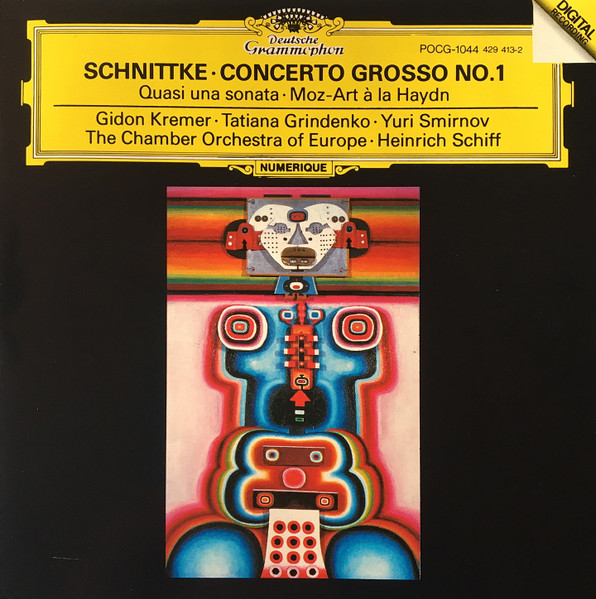
    Alfred Schnittke, Concerto Grosso No. 1, Quasi una Sonata, Moz-Art à la Haydn. Gidon Kremer, Tatiana Grindenko, Yuri Smirnov, The Chamber Orchestra of Europe, Heinrich Schiff (Deutsche Grammophon, 1988)

    Schnittke is the only composer I know of whose music often makes me laugh. To be clear, I am laughing with it, not at it. Schnittke is able to write music with an actual sense of humor! The music on this album is probably his most famous, and it’s Schnittke at his playful best: his “polystylism” gives him resources for packing in virtually every timbre and sonic texture imaginable. To have the audacity to write a “Concerto Grosso” in 1977, and then load it full of John Cage-esque prepared piano, tango, baroque trills and harpsichord flourishes, and much else? The result is playful, histrionic, bleak, daft, and fun in a way that so much classical music isn’t.

    Beck, Sea Change (DGC, 2002)

    Sea Change makes the list not only because it’s Beck, but because it inhabits a crucial place in the annals of break-up music. The songs reputedly date from the end of a long-term relationship, and to call the overall tone of this album bleak is an overstatement. It’s especially restrained and elegiac in light of the overall gonzo tone of the rest of Beck’s catalog. Is it Beck’s best music? Probably not. But I still come back to the overall emotional space Beck creates on Sea Change as a way of exploring my own emotions about relationships’ endings. I love Adele, but I feel like Beck captures a vulnerability here that Adele’s most famous love-gone-wrong songs don’t.

    Gustav Mahler, Symphony No. 6 in A Minor, “Tragic”. Vienna Philharmonic, Pierre Boulez (Deutsche Grammophon, 1995)

    Man is it hard for me to include only one Mahler recording on here! Half this list could have been Mahler. But if I have to pick one (since that is the rule I set for myself), I have to pick Boulez and the Vienna Philharmonic doing Mahler’s 6th. First off, the music itself. I am apparently one of the few Mahlerians who prefers the relative classical restraint of his middle symphonies (the 4th through the 7th) to the elephantiasis and bathos of, say, the 2nd and 3rd. Mahler reaches the pinnacle of this middle period in the 6th, a relentless, driving colossus of a symphony that well earns the apocryphal title of “Tragic.” And then there is this recording of it, which won numerous awards and accolades after its release. I have heard several recordings of the 6th by this point, but none of the others have the spaciousness and sonic edge of this one. As a friend in graduate school said, “I listen to it and ask myself: How did they do that?” The rest of Boulez’s mid-90s Mahler cycle on DG is hit or miss (one reviewer, I remember, asked rhetorically, “I wonder if Boulez actually likes this music”; ouch), but the 6th is a definite keeper.

    Vikingur Olafsson, Debussy-Rameau (Deutsche Grammophon, 2020)

    I can’t say that I was a big fan of Debussy before hearing this album, not to mention that I had heard virtually no Jean-Philippe Rameau. Olafsson, though, fully inhabits this music, showing that these two French composers, separated by centuries, complement one another. I don’t know if it’s Olafsson’s piano performances or the recording, but this may be the most intimate-sounding piano recording I have ever heard, almost painfully so. It exposes the inner life of the music like the exposed nerve-and-blood-vessel pulp of a tooth.

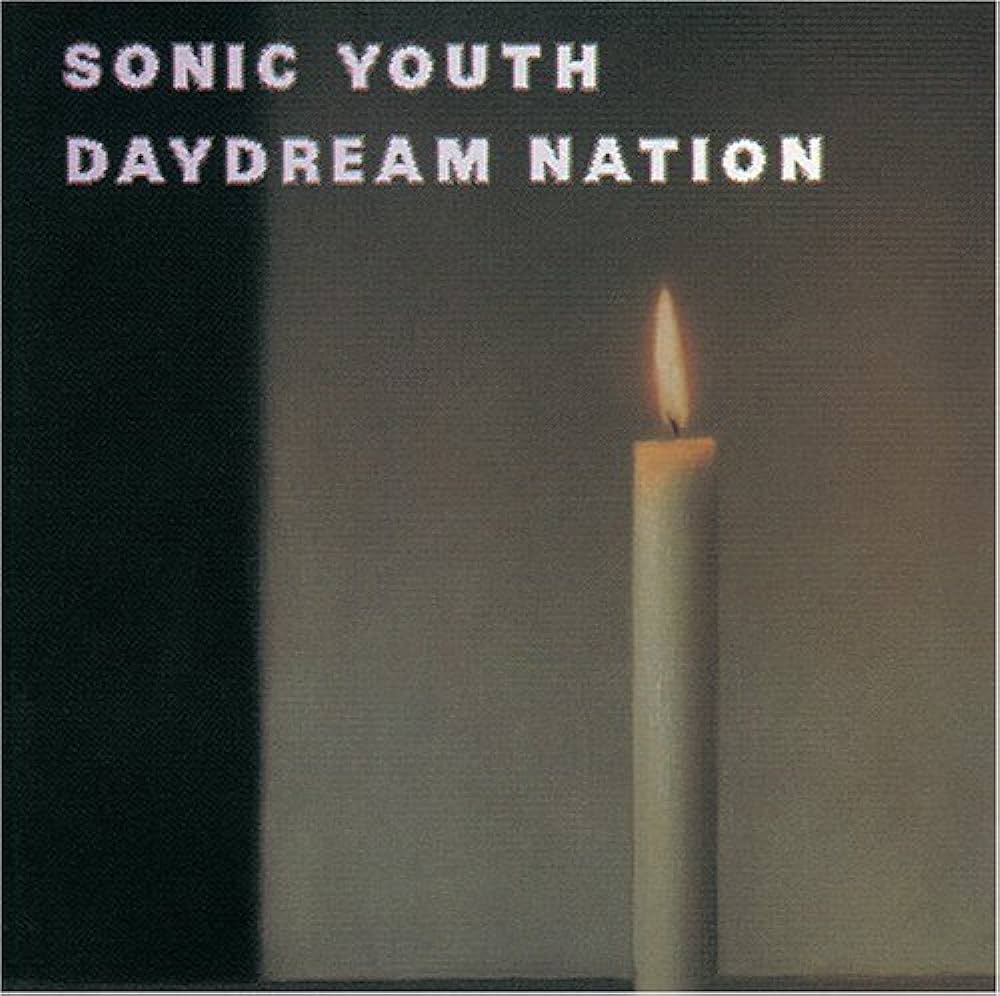
    Sonic Youth, Daydream Nation (Blast First, 1988)

    I bought Daydream Nation in 1989 on the strength of the song “Candle,” which was either the first or second single to be released from it. I listened to the whole CD and, with the exception of “Candle” and “Teen Age Riot,” the two big college-radio singles from it, it left me cold. I could not comprehend what so many critics loved about this album. I didn’t listen to the whole thing again until my mid-thirties, probably the same age as those critics who loved it back in ’88 and ’89, and I finally got it. The camp drama and overproduction of ‘70s rock meets alt-jazz on Daydream, and the mixture still feels fresh and vital to me. No one ever asks me to explain the United States in the 1980s, but if someone did I would tell them to listen to Daydream Nation and Guns ‘n Roses’ Appetite for Destruction. The entire corrupt undercarriage of 1980s America, its diseased subsoil, its addiction to power and to self-delusion: it’s all in there.

    Edward Elgar, Cello Concerto, Sea Pictures, Jacqueline du Pré, Dame Janet Baker, London Symphony Orchestra, Sir John Barbirolli (EMI/Gramophone, 1967)

    This is one of those classical albums that always makes the best-of lists, and for good reason: du Pré’s performance on this recording singlehandedly made Elgar’s Cello Concerto a household name (as it were). Only twenty years old when she recorded it, du Pré performed with such confident virtuosity that even almost sixty years and numerous recordings later, many still consider this the definitive recording of the Concerto. Of course, there is no performance without Elgar’s composition, which is probably my favorite Elgar: dramatic and complex. Dame Janet Baker’s performance of the Sea Pictures is certainly fine, but make no mistake, this is du Pré’s show.

    Richard Strauss, Tod und Verklarung, Metamorphosen, Four Last Songs. Gundula Janowitz, Berlin Philharmonic, Herbert von Karajan (Deutsche Grammophon, 1974)

    Richard Strauss was an egotistical, Nazi-collaborating, antisemitic train wreck of a human being. This needs to be said. And yet, I can’t help but love his music. The real star of this album is Gundula Janowitz’s performance of the Four Last Songs, which will haunt me for the rest of my life. No other performance I have ever heard of the Songs comes close to Janowitz. Metamorphosen is a masterpiece of musical elegy, especially if you can forget for a moment that Strauss likely wrote it to memorialize his feelings on the Allied bombing of the Munich Opera House in 1944. (I mean, there is a lot to lament or criticize about the Allied bombing campaigns in Germany at the end of the war—hello, Dresden? Anyone read Slaughterhouse-Five?—but the fact that Strauss summoned his feelings and considerable artistic temperament to mourn a building feels emblematic of a lifetime of really skewed priorities to me.)

    Keith Jarrett Trio, Still Live (ECM, 1986)

    I am one of those people who isn’t much into jazz, but I know what I like. Since I bought this double album in 1987 (or was it 1988?), I have loved it. Jarrett and his trio (Jack DeJohnette on drums, Gary Peacock on bass), in a live concert in Germany in 1986, take jazz standards (“My Funny Valentine,” “The Song is You,” “Someday My Prince Will Come”), together with some original Jarrett compositions, then transmogrify them through all kinds of unexplored musical territory. The sonic texture of this recording is astounding—it was a fairly early instance of full-digital recording—and it is engineered to an energetic sheen. Still Live also gives the listener one of Jarrett’s controversial performance tendencies—his near-constant vocalization while he plays. It’s not subtle or otherworldly, like just catching Glenn Gould’s breathing on his classic recording of the Goldberg Variations. No, he grunts, howls, squeals; it’s like someone is forcibly wringing the music out of him. A lot of people find this aspect of Jarrett distracting, but I honestly don’t. I can’t imagine this live album without it—it adds to its irresistible energy. Plus, if John Cage taught us anything he taught us that the ostensibly “non-musical” aspects of musical performance, its accidents and extraneous noises, are an irreducible part of the actual music that gets made. Jarrett’s audibly squeezing the music out of himself is an example of Cage’s insight.

    Joe Hisaishi, A Symphonic Celebration: Music from the Studio Ghibli Films of Hayao Miyazaki. Royal Philharmonic Orchestra (Deutsche Grammophon, 2023)

    OK, there is a lot of sad, dark, and/or heavy music on this list, so let’s end on a (mostly) cheerful note. I love Miyazaki movies, but I have to confess that at least half of my love of them is love of Joe Hisaishi’s music. Hisaishi has been collaborating with Miyazaki on film scores since Nausicaa of the Valley of Wind (1980), and I cannot imagine the films without his music. Nothing else quite sounds like Hisaishi to me. In 2023, DG gave Hisaishi an orchestra and the opportunity to rearrange selections from over forty years of film scores, and the results are fantastic. On my imaginary desert island, there is a lot of Hisaishi music missing from this album that I would miss, but this would give me the essentials.

    A Concluding Word

    I hope it’s clear by now that this exercise isn’t the same as “pick the ten best albums ever recorded.” Not really, anyway. I hope it comes through that I think these ten albums are pretty great, and I would love it if you listened to them because of what I say about them, but that’s not the same as an attempted critical judgment of absolute quality (whatever that is). Rather, it’s another way of answering the question “What albums do I, Brian Cubbage, like the most? Which ones have stayed with me over the course of constant listening and re-listening? Which ones best express what my emotional life is like?” The answer to those questions is a mixture of critical judgment, the limitations engendered of when and where I was born, and the sheer happenstance of when I heard (or really understood) a particular album for the first time.

    Many people have a tendency to overidentify with the music they like. There is a truth, though, in this tendency: music can serve as a social handle that we hope others can grab in the right way. Music expresses the texture of one’s emotional life in ways that little else can. Maurice Merleau-Ponty belittled music by saying it was too on the other side of the world to disclose to us the world and perception, which was of course his real cherished interest; it refers to little else but itself.[1] I’m not sure Merleau-Ponty’s take is entirely right. It overlooks the capacity music has to connect us with the inner lives of other people, which is a pretty tremendous achievement if you ask me.

    This list, then, is offered in the spirit of anyone who is curious what it is like to be inside my head, what handle you might hold onto to grasp the weirdo who writes all the other stuff posted here.


    [1] Perhaps this oversimplifies what Merleau-Ponty says about music a little bit. In a radio lecture from 1948, he accords to music the privilege of disclosing, as Proust said, the world of the musician, and beyond that the “great world of possible music, the region of Debussy, the kingdom of Bach.” But music does little more than that for Merleau-Ponty.